
Last updated August 25, 2026
Free on-site gate assessment - hinges, posts, and your LiftMaster or Nice gate operator checked before anything is quoted
The assessment is free and the quote is the invoice.

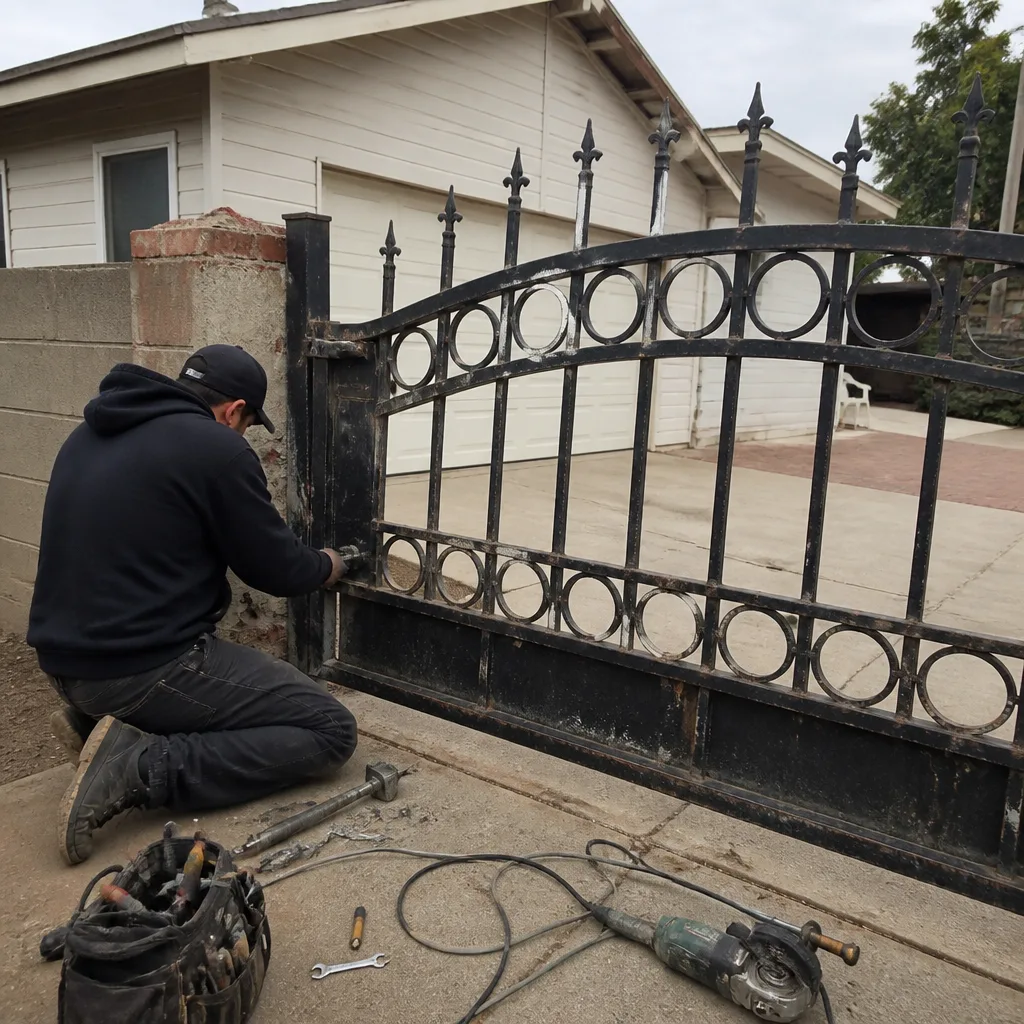 Before
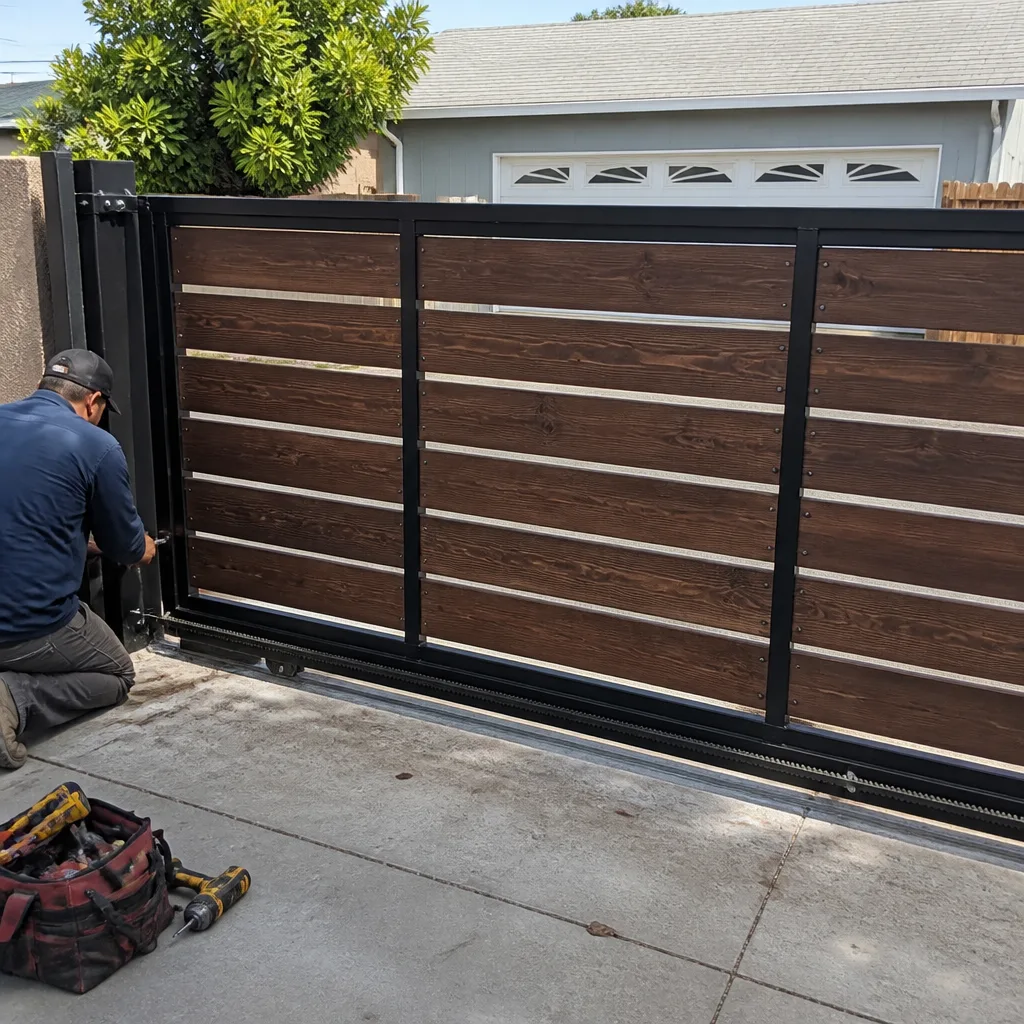 After
After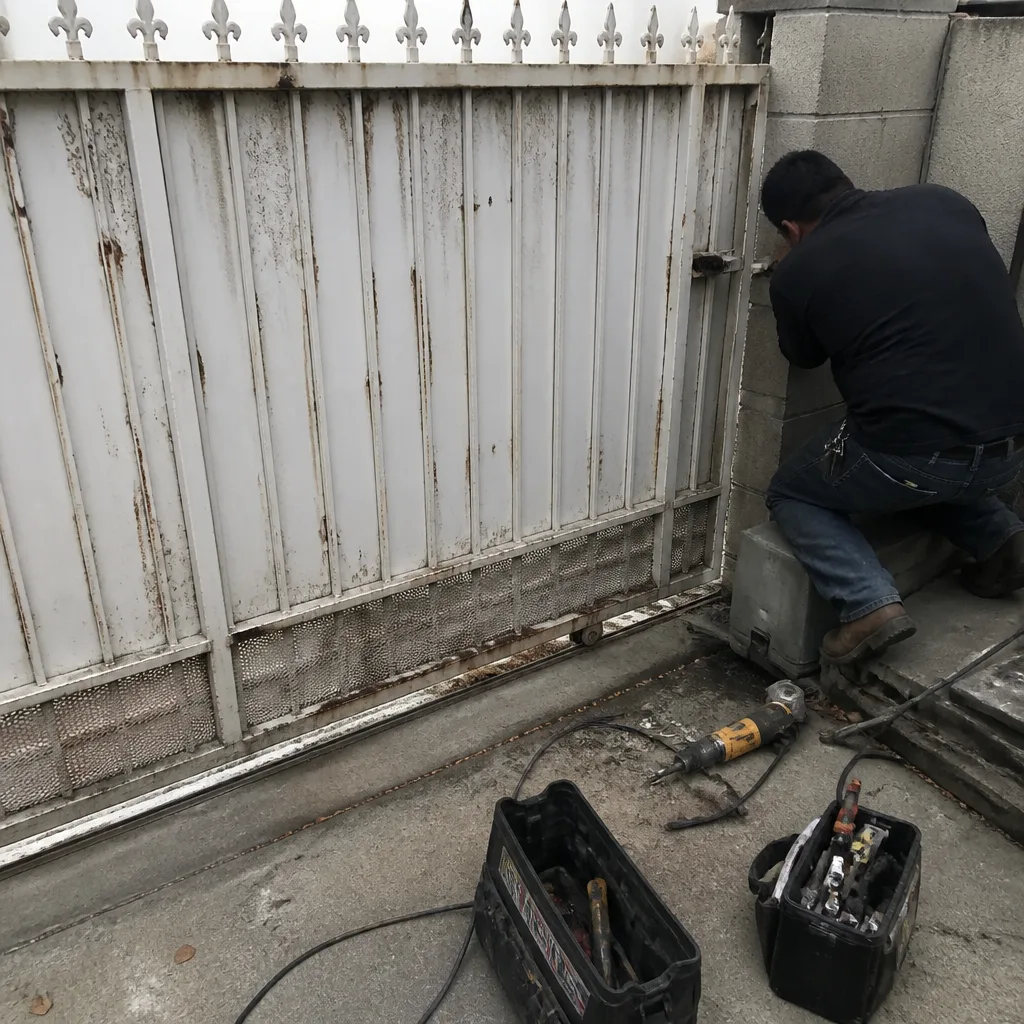 Before
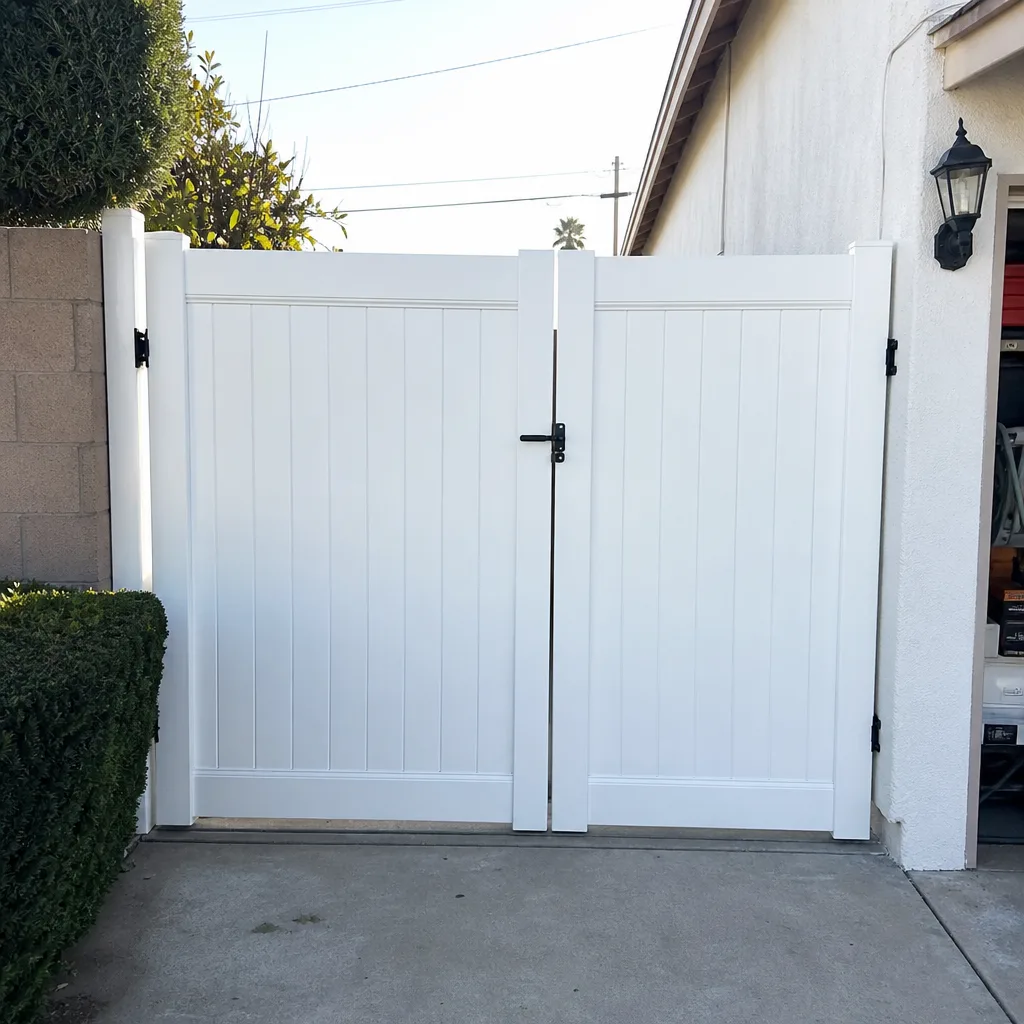 After
After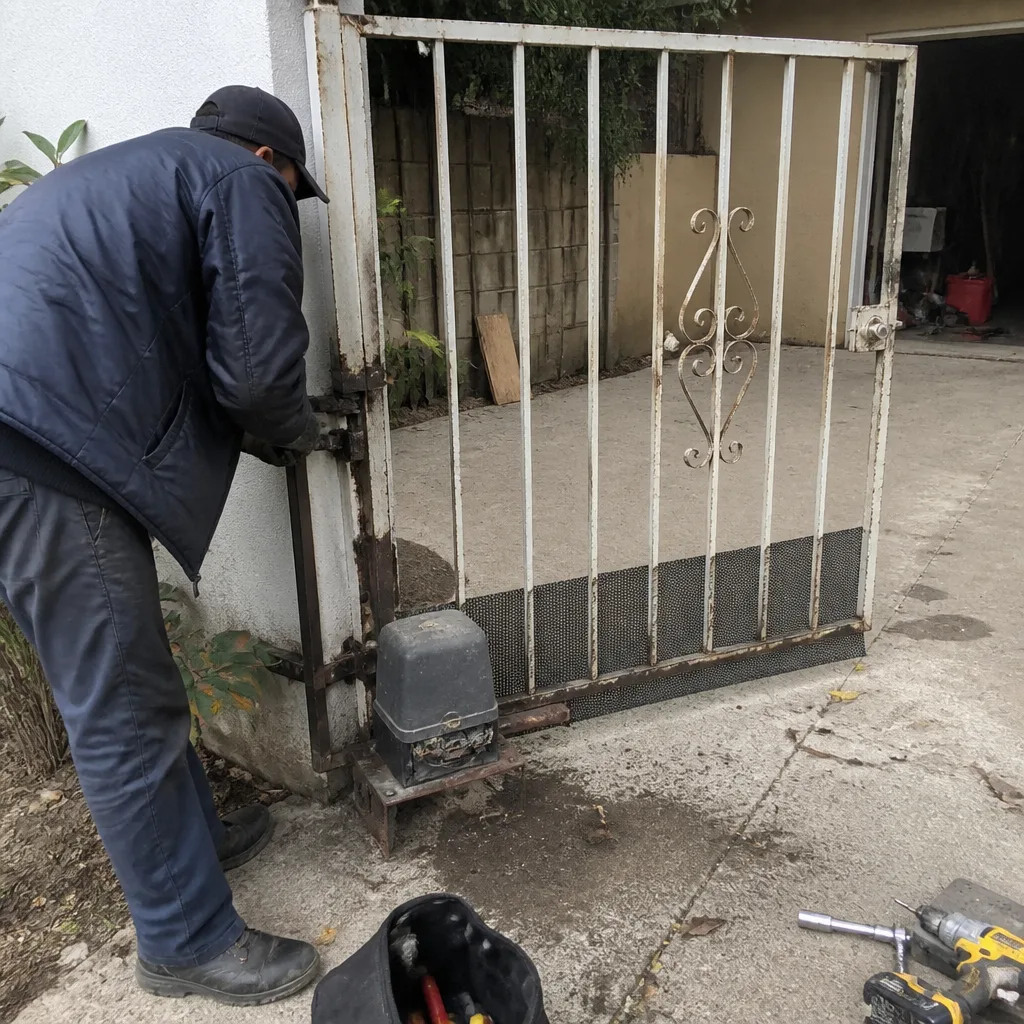 Before
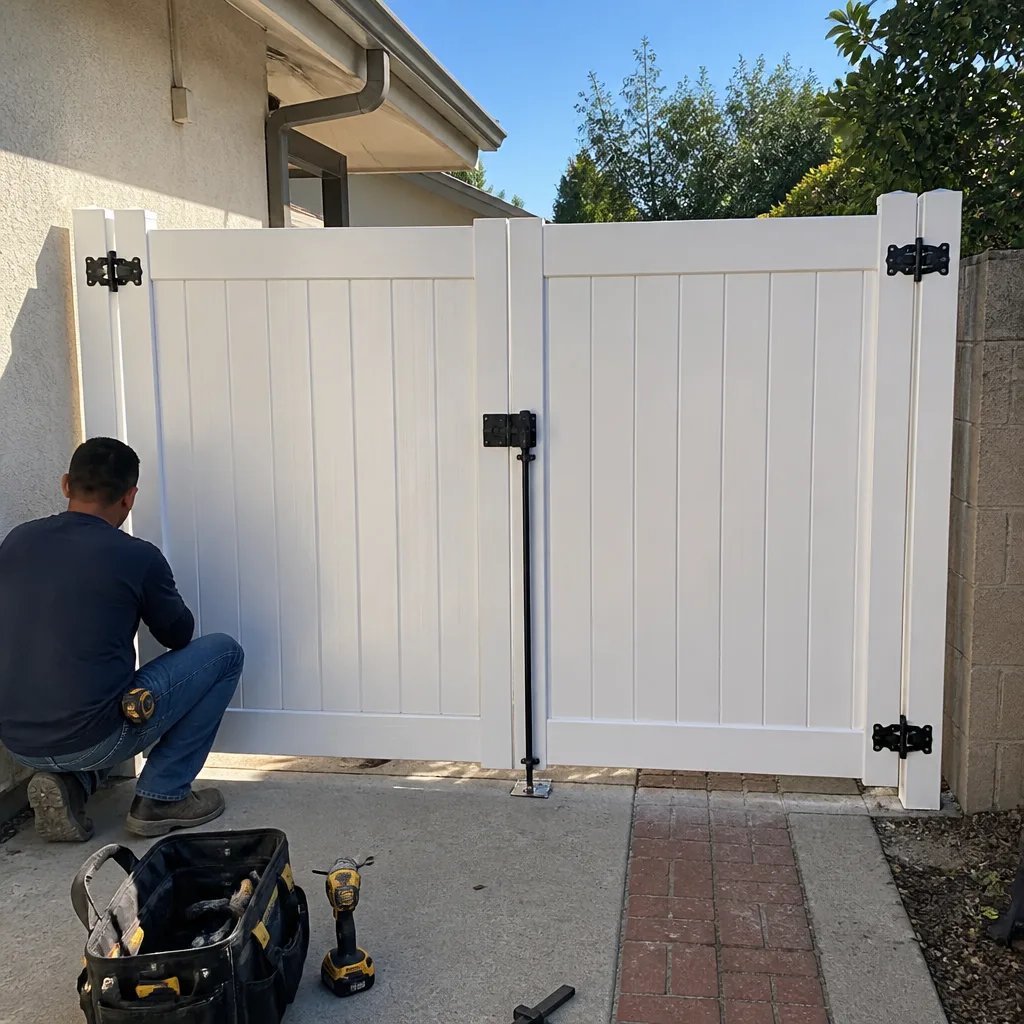 After
AfterSeasonal Gate Repair Care for Garden Grove: Year-Round Homeowner’s Guide
Most gate failures in Garden Grove don’t announce themselves with a bang. They begin as a faint scrape, a hesitation at the halfway point, a motor that runs a beat longer than it should. Homeowners tend to notice these things in the fall, when evenings come earlier and the gate gets more use in the dark. This guide walks through what to check, when to check it, and how to catch a $40 wear item before it becomes a $900 rail replacement. Written from 42 years of gate work in this city, it covers the full year, because Garden Grove doesn’t have one harsh season: it has four versions of warm, each with its own effect on steel, rollers, and circuit boards.
Quick Answer
Seasonal gate care in Garden Grove means checking steel and moving parts at least twice a year, lubricating rollers and hinges with a weather-rated product, clearing the track in fall before the rains, and watching for salt-air corrosion if you live within three miles of the coast. Spring and fall are the two windows that matter most. A professional tune-up typically runs $89 here, and the work takes under an hour on most single gates.
Table of Contents
- Why Garden Grove Weather Does What It Does to Gates
- The Spring Checklist: What to Inspect After the Rainy Season
- Summer Heat and Gate Electronics: What Fails When It’s 95
- Fall Preparation: Getting the Gate Ready for Winter Rains
- Winter Rain and What Water Actually Does to a Gate
- Lubrication: The Most Misunderstood Maintenance Task
- What a Seasonal Tune-Up in Garden Grove Includes
- Common Mistakes to Avoid
- When to Call a Professional
- Frequently Asked Questions
Why Garden Grove Weather Does What It Does to Gates
Garden Grove sits eleven miles from the Pacific, far enough inland that we don’t get the daily marine layer of Huntington Beach, but close enough that the air carries salt, especially in the spring when onshore winds push in from the coast. That salt settles on steel and aluminum, mixes with morning dew, and starts a slow corrosion process that most homeowners never see until a weld turns brown or a hinge pin seizes.
We don’t get freezing winters that snap cables or peel powder coating the way they do in the high desert. What we get instead is thermal cycling: daytime highs in the 80s and 90s from May through October, overnight lows dropping twenty-five degrees, and steel expanding and contracting through that range every single day for months. Each cycle is tiny. After twenty years of cycles, which is how long many Garden Grove homeowners have had their gates, those tiny movements have loosened bolts, flexed welds, and shifted the gate’s weight distribution. When someone calls Ironworks Gate Co. about a gate that suddenly refuses to close, the cause is rarely sudden. It’s usually a chain of small seasonal effects that finally reached the last thread.
The other Garden Grove factor is rain. The city averages around 13 inches a year, and almost all of it falls between November and March. That’s five months where standing water, wet leaves, and moist soil make contact with the lowest six inches of the gate and the track. If the track drains poorly, the wheels sit in water after every storm, and the bearings rust out from the inside. We’ve pulled wheels off gates in West Garden Grove that were rusted through entirely, because the track was never graded to shed water.
The Spring Checklist: What to Inspect After the Rainy Season
Spring is the most important maintenance window for a Garden Grove gate. The rains have stopped, the ground has dried, and the damage from five months of wet weather is visible if you know where to look. Walk through this list in order, on a weekend morning when the light is good. It takes twenty minutes, and it will catch most problems before they require a service call.
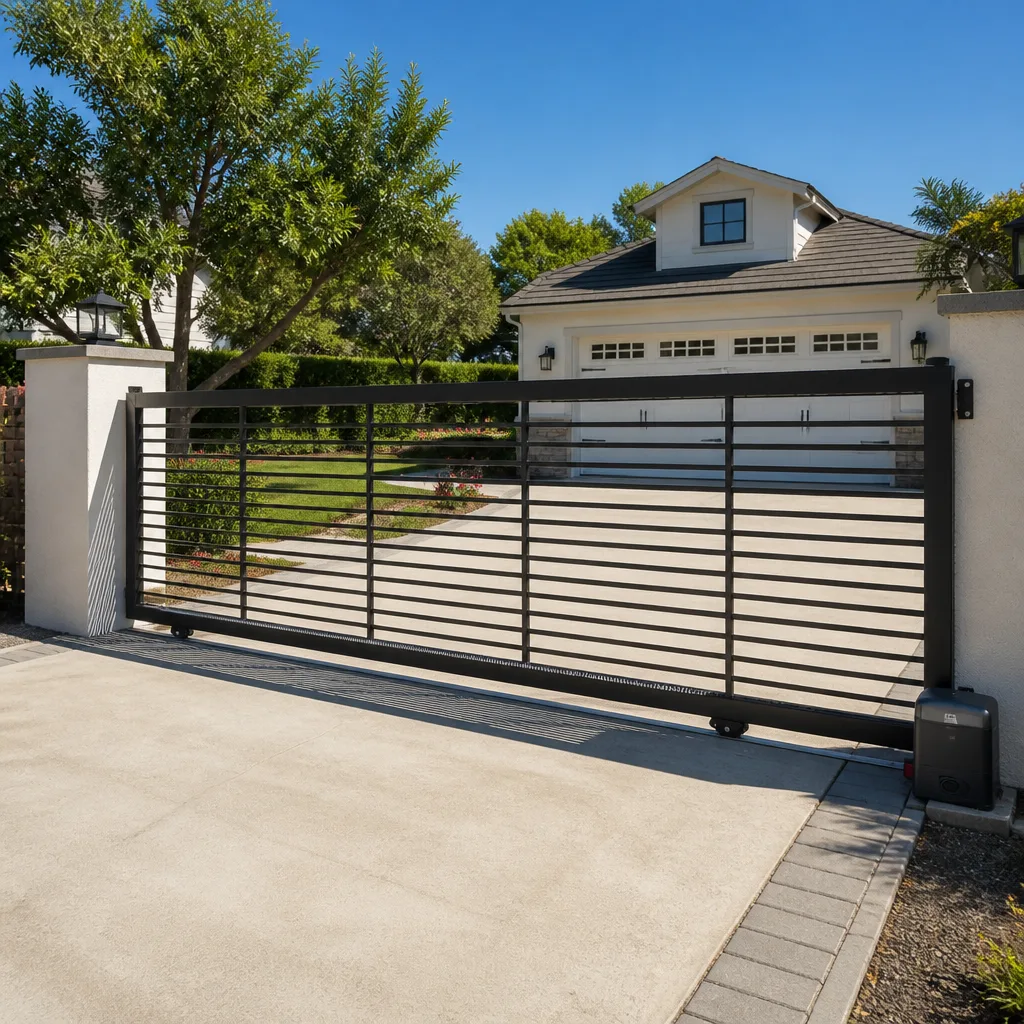
- Check the bottom rail and wheels. Get low and look at the lowest horizontal rail on a sliding gate, or the bottom hinge area on a swing gate. Brown staining, flaking paint, or rust scale means moisture has been sitting there. On a sliding gate, the wheels run on a track: check that the wheels are round, not worn flat on one side, and that the track isn’t packed with mud.
- Test the manual release. Every automated gate has a manual release so you can open it by hand during a power outage. Pull the release and push the gate through its full travel. If it drags, binds, or needs more muscle than it should, something is out of alignment. A gate that’s hard to push by hand is a gate that’s overloading its motor every time it opens.
- Inspect the safety edges and photo eyes. In spring, new growth from bougainvillea, oleander, and other Garden Grove landscaping can trigger or block the sensors. Wipe the photo eye lenses with a dry cloth and trim anything that waves in front of them. A branch that brushes a safety edge in the wind will stop the gate mid-cycle, and homeowners often mistake that for a motor problem.
- Check all hinge bolts and bracket hardware. Use a wrench, not just your eyes. A bolt can look tight and be three turns loose. Steel gates in Garden Grove flex through big daily temperature swings in spring, and that flex works bolts loose where the gate meets the post.
- Look at the welds. Run a flashlight along every weld. Fresh brown lines emanating from a weld mean the steel is cracking or the weld is failing. We often see this on older gates in the neighborhood east of Euclid, where original builders used thinner stock than the job required.
- Run the gate three times. Watch and listen. It should start smoothly, run at a constant speed, and stop without slamming. A gate that lurches at startup or slows near the end has a motor, capacitor, or limit switch issue that’s cheaper to fix in spring than in the middle of a heat wave when parts are in demand.
Summer Heat and Gate Electronics: What Fails When It’s 95
Garden Grove gets hot. Not Palm Springs hot, but hot enough. July and August afternoons routinely hit the mid-90s, and that heat is a slow killer for the electronics inside a gate operator. The control board lives inside a metal box bolted to the post or the gate, and that box bakes in direct sun all afternoon. Inside, the temperature can climb twenty degrees above ambient air. That means a 96-degree day puts the board and its capacitors at 115 or better, every day, for weeks.
Capacitors don’t like prolonged heat. They’re rated for a certain temperature range, and every hour spent at the top of that range shortens their life. In our experience at Ironworks Gate Co., the single most common summer service call in Garden Grove is a dead start capacitor: the motor hums, the gate doesn’t move, and the homeowner assumes the whole operator is shot. Sometimes it is. Often it’s a $40 part and a twenty-minute fix.
Heat also affects the gate itself. Steel expands as it warms, and a sliding gate that fit its track perfectly in spring can bind in July if the track was installed without enough clearance for thermal expansion. Swing gates distort slightly too. If your gate works fine in the morning but drags at 3 p.m., that’s the expansion gap telling you it wasn’t built for Garden Grove summers.
Here’s what summer does to the common brands we service: Viking and Elite operators are generally robust in heat, but their limits can drift when the board gets hot. Ghost Controls units, which we see more often on residential swing gates, will occasionally overheat and shut down for a cooldown period, which homeowners read as a random failure. DoorKing boxes are common across Garden Grove’s older homes, and their aluminum enclosures do shed heat better than steel ones, but no enclosure helps once the sun has been on it for six hours straight.
One simple summer protection everyone can do: shade the operator box if it sits in direct afternoon sun. A small awning or a climbing plant on a trellis positioned a foot away from the box will drop the internal temperature by ten degrees on the worst days. Don’t build anything that blocks airflow. Air needs to move across the box.
Fall Preparation: Getting the Gate Ready for Winter Rains
Fall is the second big maintenance window, and the goal here is different from spring. Spring is repair season: fixing what winter broke. Fall is preparation season: making the gate and track so the coming rains don’t break anything in the first place. In Garden Grove, rain returns right around Thanksgiving most years, but storms have arrived as early as October. Do the fall prep in September or October, while the ground is still bone dry.
The Fall Prep Sequence
- Clear the track completely. Five months of dry weather drops a lot of material into a sliding gate track: leaves, dirt, gravel, dead insects, grass clippings. When the first heavy rain hits, that material turns to mud, and the wheels churn through it like a blender, compacting it into the track’s corners. Once packed, it throws the gate off level, and then the wheels wear unevenly. A dry shop vacuum and a stiff brush are the right tools. Clear the entire track length, not just the opening.
- Check the drainage. After the track is clear, run a hose for a few minutes and watch what the water does. If it ponds anywhere in the track, that’s a rust factory. The track should be slightly pitched or have weep holes at the low point. If it doesn’t drain, a gate technician can adjust the track or add drainage. Do this before the rainy season, not during it.
- Seal any bare steel. Scrape or wire-brush any rust you find, then touch up with a rust-inhibiting primer and paint. Bare steel in a Garden Grove fall will be rust-blistered steel by February. Pay attention to low corners, the bottom rail, and where the gate bolts to the hinges.
- Lubricate properly. Fall lubrication should use a heavier product than spring (more detail below). You want a film that will stay on through water exposure.
- Test the battery backup. If your operator has one, fall is the time to confirm it still works. Winter storms knock out power in Garden Grove a few times a year, and a dead battery in a blackout means a gate that’s stuck closed, blocking the car in the driveway.
Winter Rain and What Water Actually Does to a Gate
People think rain ruins gates by rusting them. Rust is real, and it’s part of it, but water does two other things in Garden Grove that are more common and less visible.
First, water is heavy. A saturated leaf bed in the track, soaked soil pushing against a fence post, or a sheet of water standing in a low corner adds weight to the gate and drag to the mechanism. A motor sized for a 400-pound gate might be pushing the equivalent of 450 pounds after a week of rain. The motor runs hotter, the gears wear faster, and the amp draw climbs until a breaker trips or the board’s overload protection kicks in.
Second, water travels. It enters through a cracked seal on the operator box, follows the wiring conduit down to the control board, wicks into the limit switch, and causes intermittent faults that make no sense on a dry day. We get calls after every winter storm in Garden Grove from homeowners whose gate “randomly” stopped working after the rain. It wasn’t random. Water found a path.
Specific winter checks for Garden Grove homeowners:
- After each storm, check that the operator box is dry inside. Open it (power off first) and look for condensation on the underside of the lid.
- Check that the gate still opens with the same speed it had in October. A slower gate after rain means water or rust has changed the equation.
- Clear leaves within two feet of the gate on both sides. Wet leaves hold moisture against the steel.
- If you live in the parts of Garden Grove with older storm drains that back up, like some streets north of Garden Grove Boulevard, check the low end of the gate track after heavy rain. If it sat in water for hours, address the drainage before spring.
Lubrication: The Most Misunderstood Maintenance Task
Half the gate owners in Garden Grove never lubricate anything, and the other half use the wrong product. Here is the short version: use a dry film lubricant or a silicone spray on rollers, hinges, wheels, and the track. Use a white lithium grease on the drive chain, if your gate has one. Never use WD-40 as a lubricant.
WD-40 is a water displacer and a cleaner. It will free a stuck part, which is why people think it’s a lubricant, but it evaporates within days and leaves the part with less protective film than it had before. Two weeks after a WD-40 application, the metal is drier and more exposed than if you’d done nothing. In Garden Grove’s humid coastal air, that speeds up rust.
Here’s the sequence: clean first, then lubricate. If you spray lubricant over dirt and grit, you’ve made a grinding paste that wears parts faster than no lubricant at all. Wipe the roller or hinge with a rag, brush off the loose material, then apply.
On a sliding gate, the wheels are the priority. Garden Grove’s dry months leave dust everywhere, and that dust settles into the wheel bearings. A few sprays of silicone lubricant on each wheel, twice a year, is cheap insurance. The track itself should stay dry: lubricating the track just attracts grit. On a swing gate, the hinge pins need a drop of oil every few months. Lift the gate slightly with a pry bar if you can, put the oil where the pin enters the hinge, and work the gate back and forth to pull the lubricant in.
We’ve been asked many times, over many years, what the best lubricant is. The honest answer at Ironworks Gate Co.: the one that’s weather-rated for Southern California, applied on a schedule. A can of good silicone spray costs eleven dollars. It will last a year. That’s the cheapest gate maintenance there is.
What a Seasonal Tune-Up in Garden Grove Includes
When we do a seasonal tune-up for a Garden Grove customer, the charge is $89, and the visit takes between forty-five minutes and an hour for a single gate. The goal is not just to lubricate and leave: it’s to find the small thing that will be a big thing if nobody catches it. Most tune-ups catch at least one item, and the customer gets a straight explanation of what we found, what it will cost to fix now, and what happens if they wait.
A standard tune-up covers:
- Clean and lubricate all wheels, rollers, hinges, and the drive chain
- Check and tighten all fasteners: hinge bolts, bracket bolts, track anchors
- Inspect welds and steel for cracks, rust, or stress marks
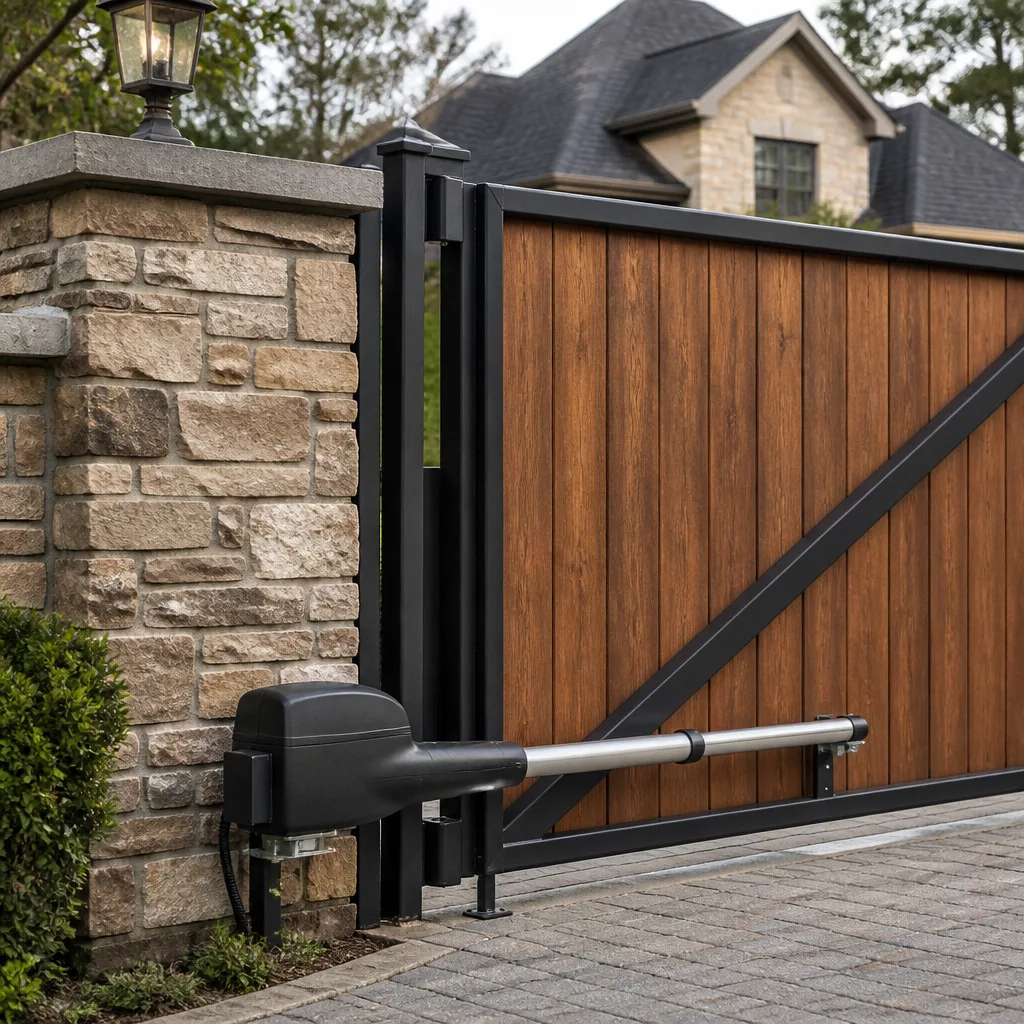
- Test the operator: motor, capacitor, control board, limit switches
- Align and test photo eyes and safety edges
- Test the manual release and battery backup
- Check the track for level, wear, and drainage
- Run the gate through ten full open-close cycles to confirm everything works
We also check the gate against its own history. If a gate in Garden Grove has been getting gradually harder to open over several visits, that tells us something structural is shifting. A wheel that wore out in two years instead of eight tells us the weight distribution changed. The tune-up isn’t just maintenance, it’s a record of how the gate is aging, and that record says more than any single inspection.
Homeowners who live in older Garden Grove neighborhoods, where gates were often installed in the 1980s and 1990s, benefit most from consistent seasonal service. Those gates were built thicker than most modern ones, which is good, but they’ve also had decades of weather cycles, and the welds from that era were sometimes just adequate. A tune-up on a 35-year-old steel gate is not optional maintenance. It’s how you avoid the day the gate drops off its hinges.
Common Mistakes to Avoid
- Ignoring a noisy gate. A gate that squeaks, grinds, or scrapes is telling you that metal is wearing against metal. The sound is the cheapest diagnostic tool you own. Every month of ignoring a squeak means more wear, and in Garden Grove, it usually ends with a failed wheel or a scored hinge pin and a repair that costs more than the lubrication that would have prevented it.
- Using WD-40 as a lubricant. It frees stuck parts, but it evaporates in days and leaves the metal drier than before. Stick to silicone spray for rollers and hinges and lithium grease for chains. This single mistake causes more premature gate wear in Garden Grove than any other homeowner habit.
- Painting over active rust. You can’t paint rust into submission. If you don’t remove the corrosion to bare metal first, the rust continues growing under your new paint, and the blistering returns within a year. Wire brush, rust-inhibiting primer, then paint. In the coastal air we get here, the prep work matters more than the paint.
- Running the gate after a storm without checking it. If the track flooded, the wheel bearings are wet, and running the gate pumps that water deeper. After heavy rain in Garden Grove, check the track before you hit the remote.
- Waiting until the gate stops to call for help. By the time a gate fully fails, the damage has usually been building for months. A drag, a pause, a new noise: any of those should trigger a call. Repairing a gate that still works is cheaper than resurrecting one that doesn’t.
- Planting fast-growing ground cover near the track. Ivy and similar plants find the track within a season and throw off the sensors. If you want greenery near the gate in Garden Grove, plant it four feet back and keep it trimmed.
When to Call a Professional
Some gate work is homeowner work: lubricating, cleaning, checking bolts, clearing leaves. Other work needs a trained hand, and the line matters. If the gate is binding against the track because it’s out of square, adjusting it wrong makes the problem worse and can pinch a finger. If the motor runs but the gate doesn’t move, diagnosing it correctly means opening the operator and testing live circuits, which is not a homeowner job. High-tension springs on some older swing gates carry enough stored energy to cause serious injury if released improperly; those should always be left to a technician. And if a weld has cracked or broken, no product from a hardware store will fix it. Steel needs heat and filler, and that’s a welder’s job with proper equipment and training. Ironworks Gate Co. offers free estimates in Garden Grove, and a technician can look at the gate and tell you honestly whether it’s a job for you, a job for us, or a job for the scrap pile. Call (424) 395-4973 to schedule a visit. The price is quoted and agreed upon before any work starts, every time.
Frequently Asked Questions
Minor gate repair in Garden Grove, like a wheel replacement or limit switch adjustment, typically runs $120 to $300. More involved repairs, like a motor replacement or a welded hinge fix, can run $500 to $1,400 depending on the gate’s size and the parts required. We quote the full price before any work begins, and there’s no surprise invoice at the end. Call (424) 395-4973 for an exact number on your specific gate.
For most repairs, yes. Gates that are stuck closed take priority, and we carry enough parts stock to handle common failures on the brands we service in one visit. A live person answers the phone at any hour, and we’ll tell you straight when we can be there. Call (424) 395-4973 and describe what the gate is doing.
The tune-up covers lubrication of all moving parts, tightening every accessible bolt, inspecting the welds and steel, testing the operator and limit switches, aligning the safety sensors, checking the battery backup, and running the gate through ten full cycles to confirm proper operation. It catches the small problems before they turn into repair bills. It takes about an hour on a single gate.
We do, and we see it all over Garden Grove’s western neighborhoods when the onshore winds carry salt from the ocean in spring. Corrosion treatment means removing the rust to bare metal, treating with a rust inhibitor, and repainting, plus checking that the corrosion hasn’t compromised the structural welds. The earlier it’s caught, the easier the fix.
We service nine major gate-automation brands, including Viking, Elite, Ghost Controls, and DoorKing, which are the ones we see most often on driveways around Garden Grove. Whatever brand is on your post, the diagnosis and the fix happen in one visit most of the time, because we carry parts and training for all of them.
Yes. A gate that works fine today is exactly the gate that should be inspected twice a year. The point of seasonal care is not to fix what’s broken, it’s to keep what’s working from breaking in a way that costs ten times as much. In Garden Grove’s climate, where heat stress and salt air work on a gate all year, consistent maintenance is the cheapest way to own a gate, and the $89 tune-up usually pays for itself in avoided repairs.
The Bottom Line
Garden Grove weather doesn’t beat on a gate the way a Minnesota winter does. What it does is slower and more subtle: a little salt in the air, a lot of heat on the electronics, a few months of standing water at the track, year after year. A gate that gets twice-yearly attention will run twenty years with modest repairs, and a gate that gets ignored will eventually stop one morning at the worst possible moment. The work isn’t complicated: clean it, lubricate it with the right product, check the fasteners and the electronics, and fix small things before they grow. Do that, and you’ll own a gate, not a problem. If you’d rather have us do it, we’re at Ironworks Gate Co. home in Garden Grove, and the phone number is (424) 395-4973. The estimate is free, the price is upfront, and the work is backed in writing for 90 days after it’s done.
Written by Victor Salinas, Owner at Ironworks Gate Co., serving Garden Grove since 2013.