
Last updated August 25, 2026
Free on-site gate assessment - hinges, posts, and your LiftMaster or Nice gate operator checked before anything is quoted
The assessment is free and the quote is the invoice.

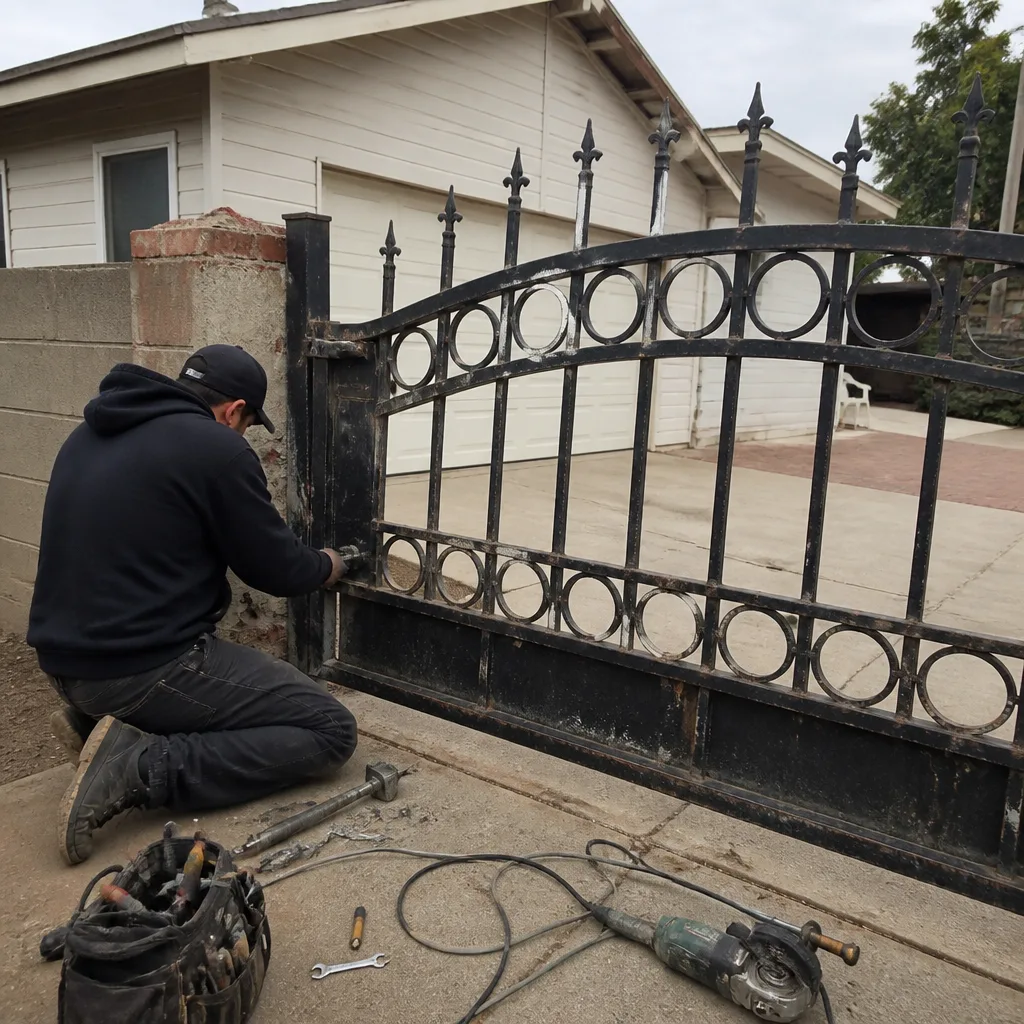 Before
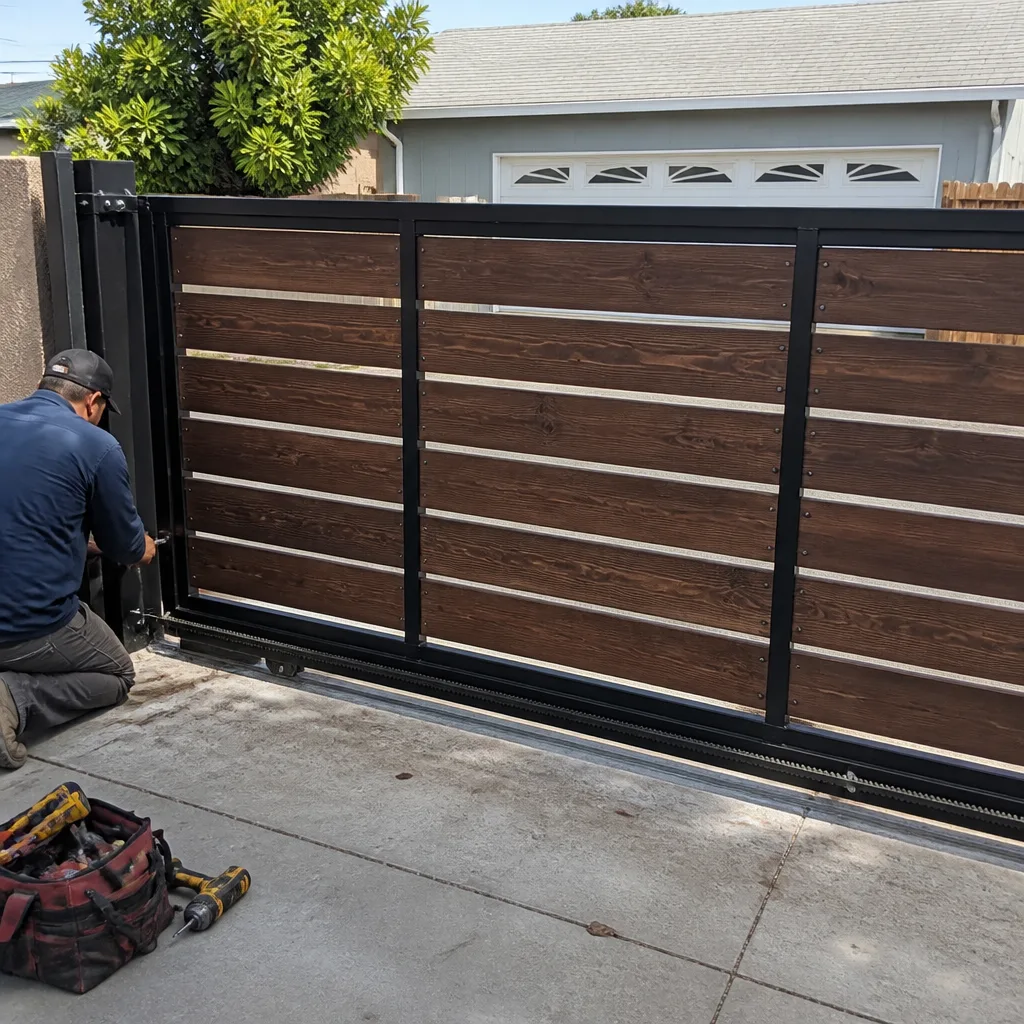 After
After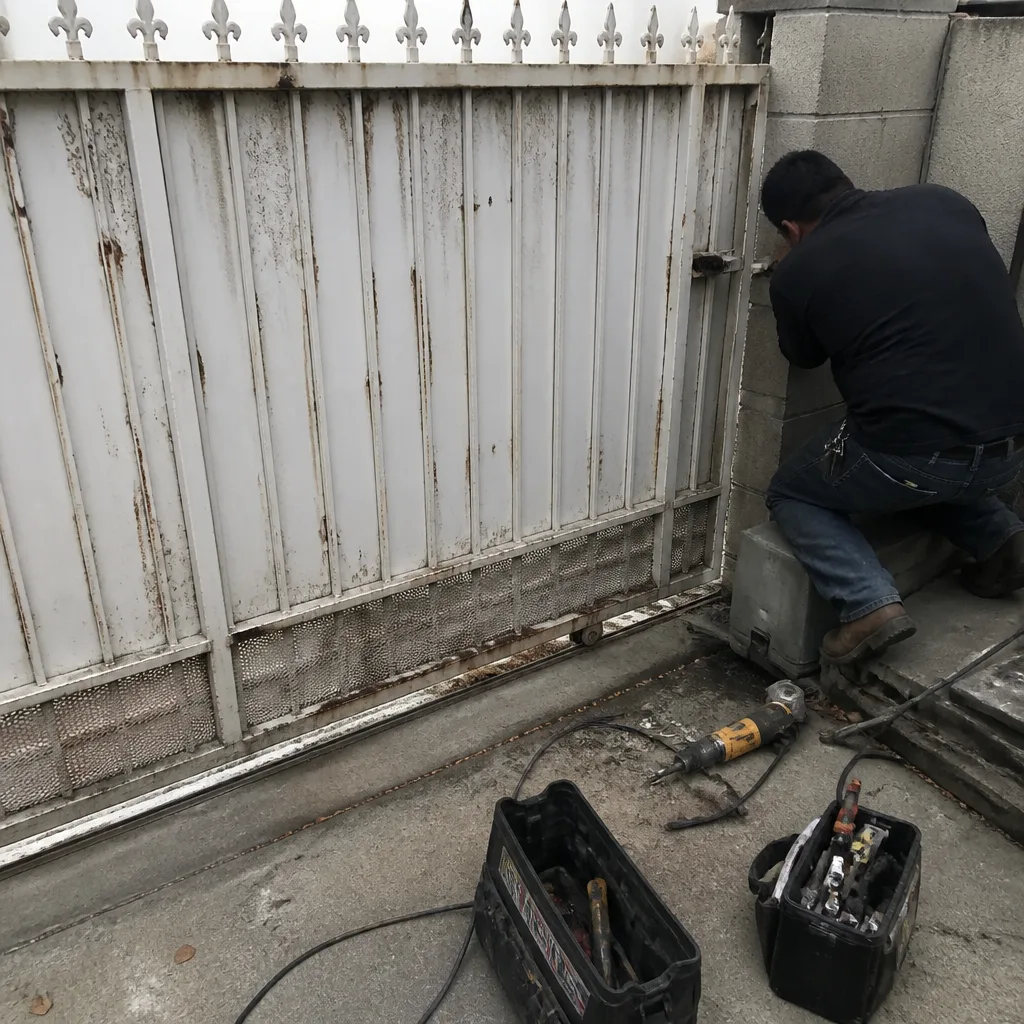 Before
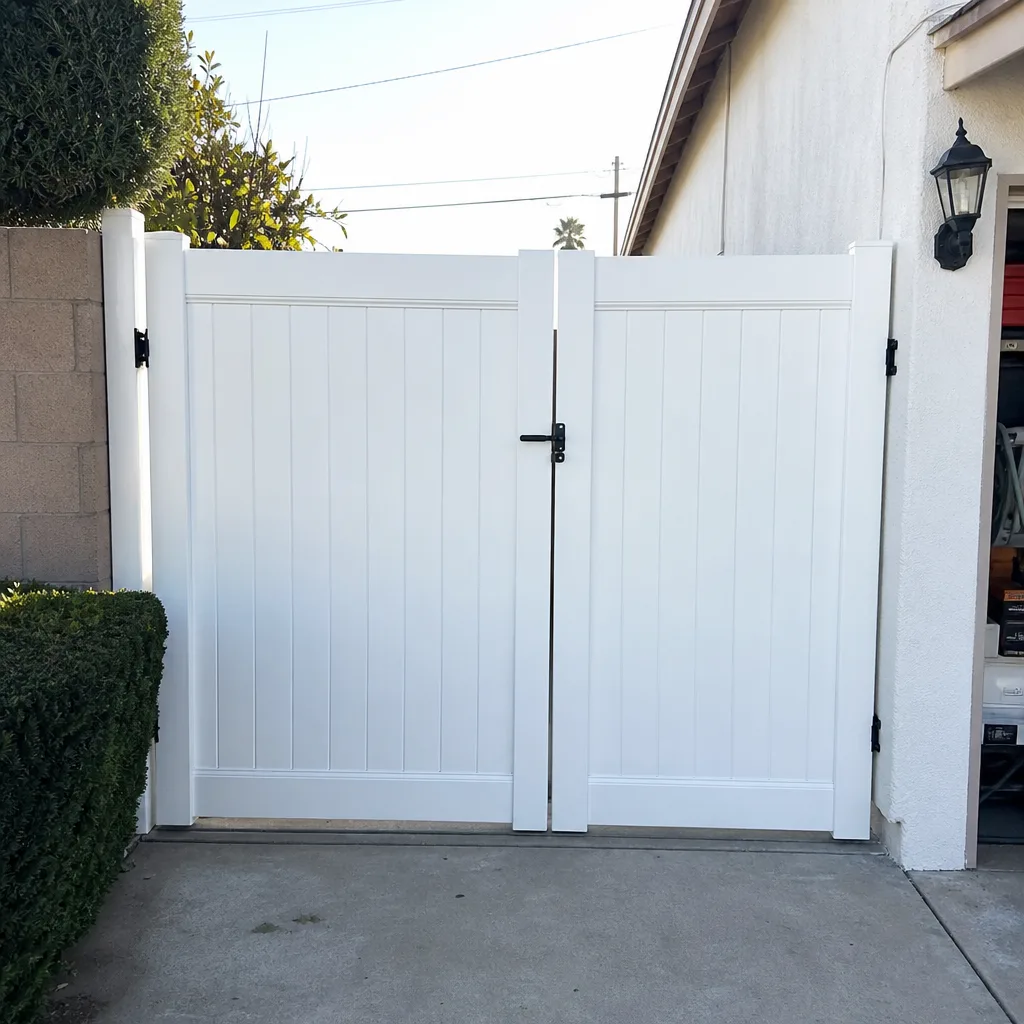 After
After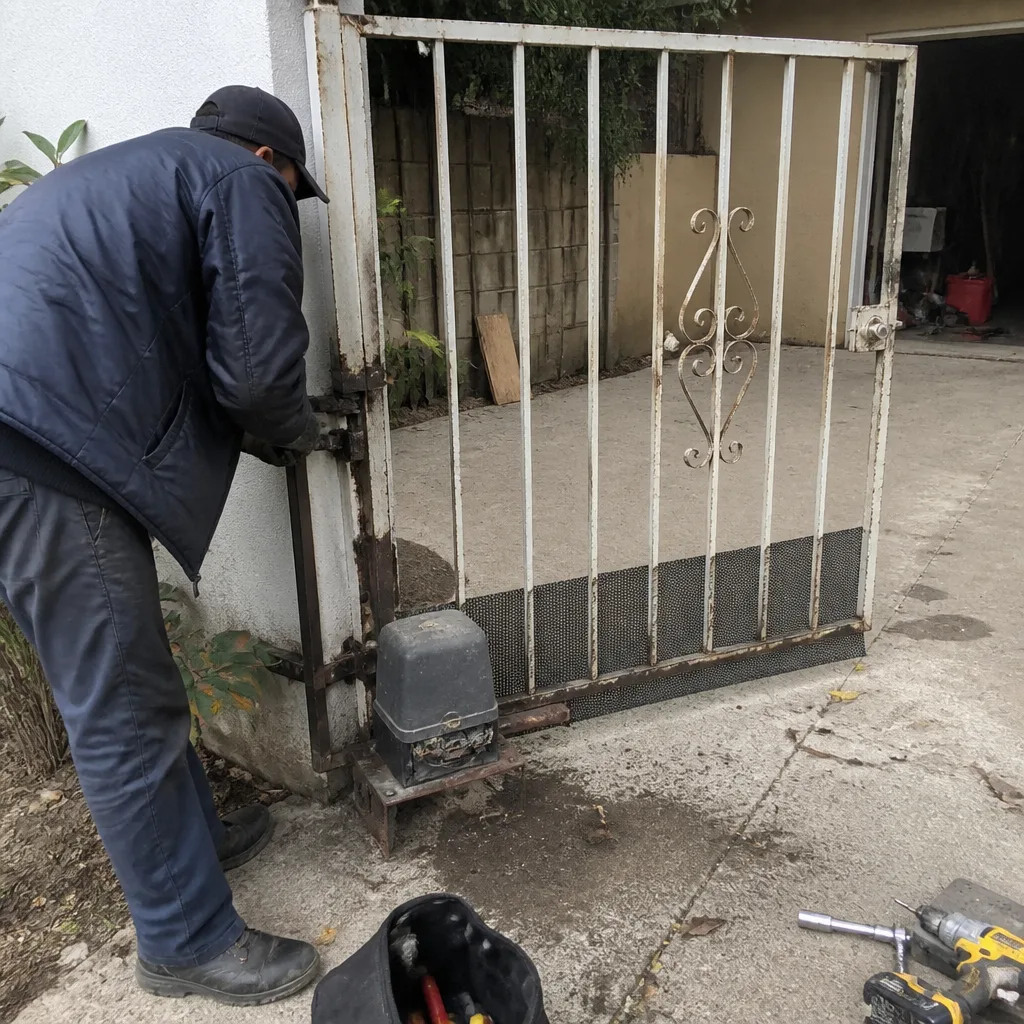 Before
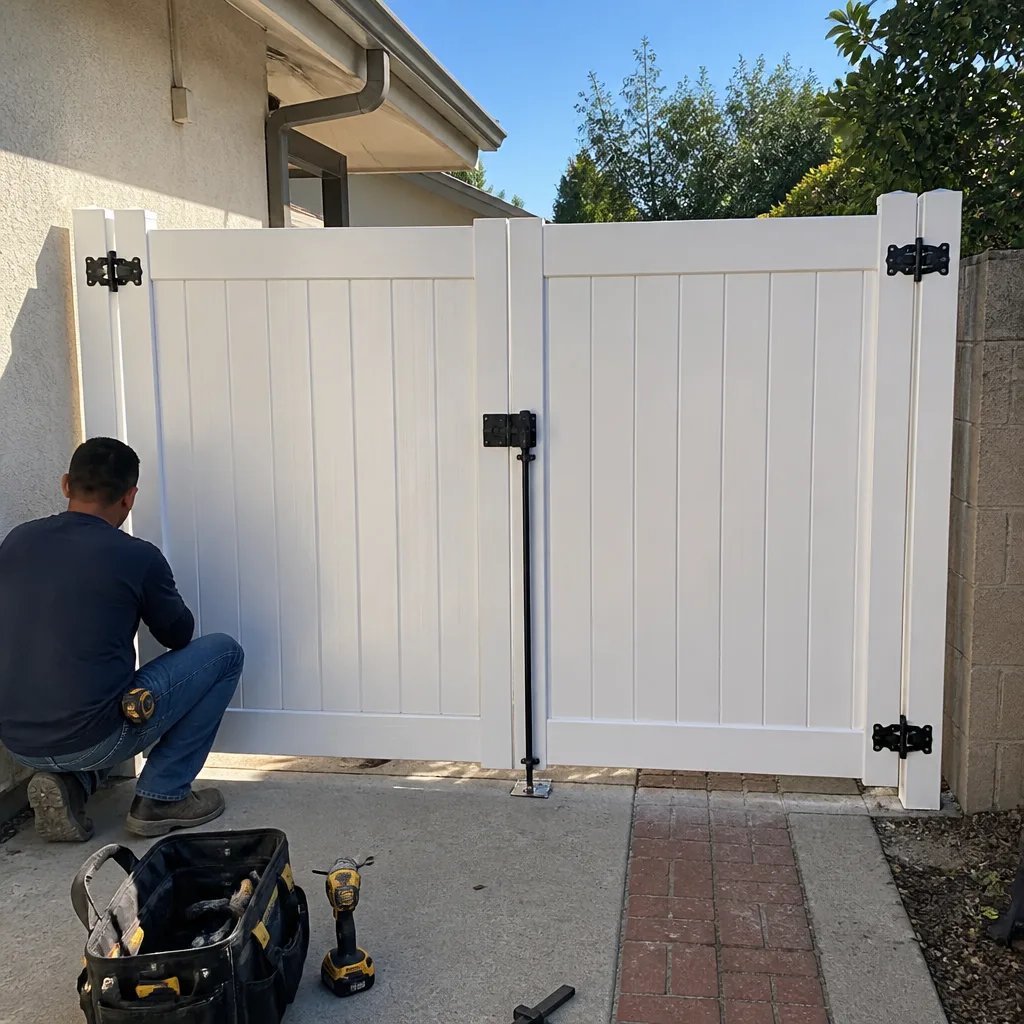 After
AfterGate Repair Maintenance Checklist for Garden Grove Homeowners
Most gate failures in Garden Grove don’t start with a crash or a snapped hinge. They start quietly: a slight sag at the latch side, a motor that labors for half a second longer than it did last month, a wheel that leaves a faint gray line on the concrete. By the time the gate stops opening entirely, the repair bill has usually been growing for six months. This guide is a working homeowner’s maintenance checklist, built for the specific conditions we deal with in Garden Grove every week: coastal air, clay soil that shifts, sprinkler overspray, and gates that were installed twenty years ago and expected to hold up forever. We’ll show you what to check, when to check it, and when to put down the wrench and pick up the phone.
Quick Answer
A Garden Grove gate needs a full visual and mechanical inspection every 60 to 90 days, with extra attention to hinges, wheels, the opener’s force settings, and the safety edges in the weeks after heavy rain or Santa Ana wind events. The items that fail most in this climate are bottom wheels, steel post bases rusting at grade level, and opener control boards damaged by ants. We suggest running through the 12-step checklist below each season and calling (424) 395-4973 the moment you hear a new sound or see a new sag. Fixing a gate early costs a fraction of what a full reset costs after a rail bends or a motor burns out.
Table of Contents
- Understanding What Your Garden Grove Gate Is Actually Made Of
- Seasonal Maintenance Schedule for Garden Grove
- The 12-Step Gate Inspection Checklist
- Hinges, Wheels, and the Hardware That Carries the Weight
- Gate Opener and Motor Maintenance
- How Garden Grove’s Climate Attacks Your Gate
- Safety Edges, Photo Eyes, and Why They Matter
- Common Mistakes to Avoid
- When to Call a Professional
- Frequently Asked Questions
- The Bottom Line
Understanding What Your Garden Grove Gate Is Actually Made Of
Before you can maintain a gate, you need to know what kind of gate you have. In Garden Grove, most driveway gates fall into three categories: sliding gates that roll on a track or cantilever off the ground, swing gates that pivot on hinges or post bearings, and the occasional vertical-lift gate, though those are rare on residential properties here. Each type fails in its own way, and each one needs a different kind of attention.
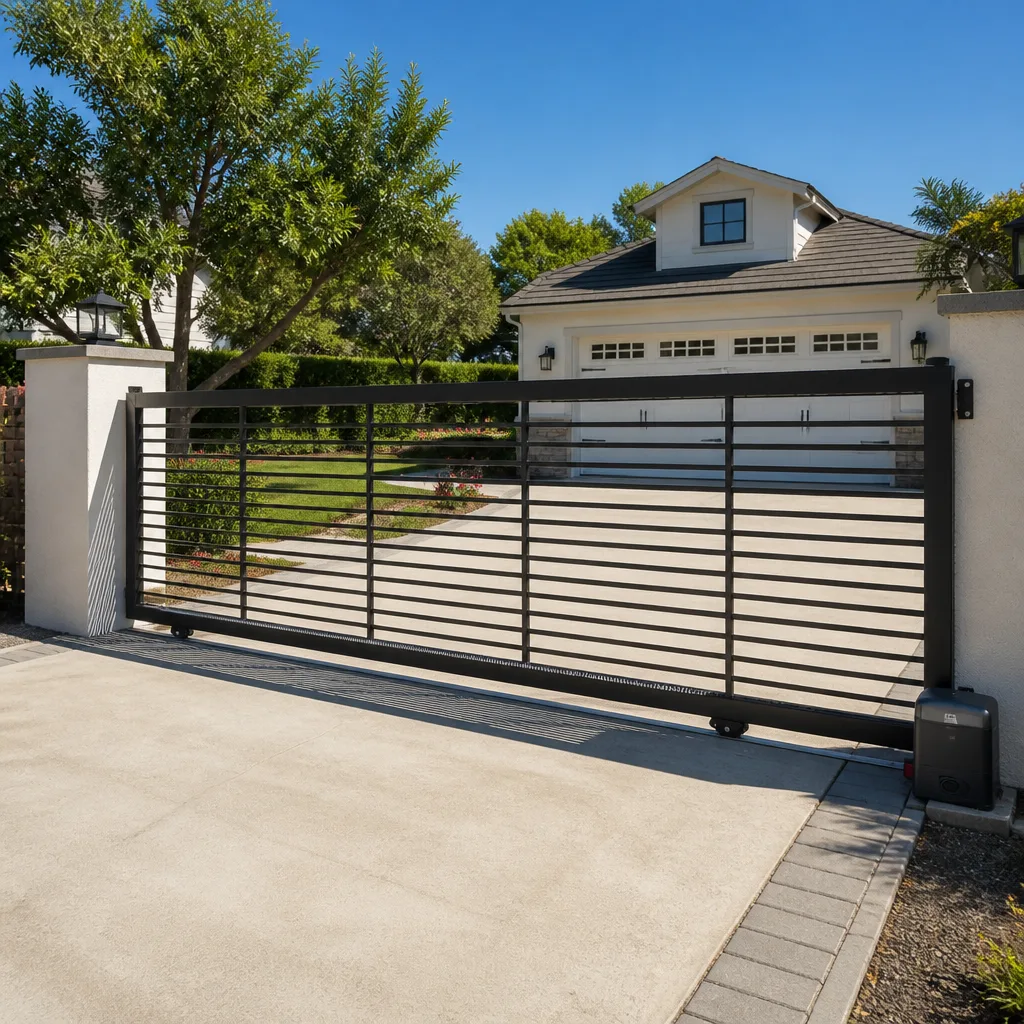
Sliding gates are common on wider driveways in the older ranch-style neighborhoods south of Chapman Avenue and in the larger lots near West Garden Grove. These gates ride on steel wheels that run along a track or on a V-rail set into the driveway. The load is constant. A 14-foot steel slider can weigh 600 pounds or more, and all of that weight sits on two or four small wheels. When a wheel bearing starts to go flat, the gate doesn’t stop working. It just starts grinding, then dragging, then bending the rail. That is the progression we see again and again.
Swing gates dominate the neighborhoods with narrower driveways and the newer developments north of the 22. A double swing gate is simpler than a slider in some ways, but it loads the hinges differently. The hinge post carries the entire cantilevered weight of each leaf, and in Garden Grove’s soil, the post base is the weak point. If the concrete footing was poured shallow or the post wasn’t set deep enough, years of opening and closing will slowly tilt the post toward the driveway center. You will see the gap between the two leaves close at the top and open at the bottom. That is post fatigue, and no amount of latch adjustment will fix it.
Knowing which type you have tells you where to look first. A slider wants your eyes on the wheels and rail. A swing gate wants your eyes on the hinge post and the leaf alignment. A knowledgeable homeowner with that one piece of understanding will catch a $300 repair before it becomes a $3,000 rebuild.
Seasonal Maintenance Schedule for Garden Grove
Garden Grove gets about 14 inches of rain a year, which sounds mild until you remember that all of it tends to fall between November and March, and that the rest of the year is dry enough to crack the clay soil in your yard. Your gate lives in that cycle. The ground swells in winter and shrinks in summer, and the gate’s alignment shifts with it. A maintenance schedule that matches the seasons catches problems at the moment they start.
Spring (April – May)
- Check post bases for new cracks in the concrete or visible rust at grade level.
- Wash off any accumulated silt or debris from winter rain along the track and wheels.
- Test the opener’s force settings. Many openers need a slight adjustment after the soil settles.
- Look for ant activity inside the opener housing. The first warm weeks are when they move in.
Summer (June – September)
- Lubricate hinges and wheel bearings with a quality penetrating oil, then wipe away the excess. Dust sticks to wet lubricant and works like sandpaper.
- Check the gate leaf for heat-warp, especially on dark-painted steel gates that face west into the afternoon sun.
- Inspect safety photo eyes for a film of dust or sprinkler mineral deposits.
Fall (October – November)
- Run the full 12-step checklist below before the first real rain event.
- Check drainage around post footings. Make sure sprinklers are not spraying directly onto the gate frame or opener post in the wet months.
- Service the opener’s internal gearbox if it has been more than two years. A fall service is cheaper than a winter emergency call.
Winter (December – March)
- After each heavy rain, check that the gate still moves freely with no new drag or grinding.
- Watch the bottom of the gate leaf for new rust blooms where road splash and standing puddles hit the steel.
- Keep the track clean of leaves and mud. A clogged track makes the motor push harder than it should.
The 12-Step Gate Inspection Checklist
This is the working checklist we hand to homeowners in Garden Grove who ask us what they should be doing between service calls. It takes about 20 minutes. Run it with the gate in manual mode so you can move the leaf by hand and feel what the motor feels. If your opener has a clutch release, start there.
- Visual sweep. Stand at the end of the driveway and look at the gate straight on. Note any sag, tilt, or uneven gap. Your eye will catch what you have been walking past for months.
- Listen to it run. Open and close the gate once on automatic power. Listen for grinding, squealing, or a motor that labors. A healthy gate opener sounds like a low hum, not a strained whine.
- Check the wheels (sliders). Look at each wheel where it touches the rail. Flat spots, visible bearing wear, or wheels that don’t spin at all are all replacement triggers.
- Check the hinge screws (swing gates). Put a wrench on every hinge screw. If any are loose or stripped, the leaf is moving the hinge instead of the hinge guiding the leaf.
- Inspect the post bases. Clear away mulch or dirt and look for rust, cracks in the concrete, or a visible lean. A leaning post on a swing gate is the most expensive repair on the list, and the earliest warning sign is a cheap look at the base.
- Test the safety edges (automated gates). With the gate closing, put a firm hand against the leading edge. It should reverse immediately. If it doesn’t, stop using the gate on automatic until it’s serviced.
- Check the photo eyes. Wipe both lenses with a dry cloth. Break the beam with your hand and confirm the gate stops and reverses.
- Inspect the power wiring. Look for conduit that has pulled away from the motor housing, exposed wire, or cracked junction boxes. This is a job for a professional if anything looks compromised.
- Lubricate hinges and bearings. Apply a light penetrating lubricant to hinge pins and wheel bearings, then wipe off any overspray.
- Clean the track and rail. Use a stiff brush to clear the V-rail or track of gravel, leaves, and dirt. A clear rail is a quiet, long-lived motor.
- Check the gate stop and the catch post. Look for fresh dents or scrapes. The gate should meet the stop softly, not crash into it.
- Run a full open-close cycle from both the wall button and each remote. Note any delay, stutter, or unexplained reversal. None of those are normal, and all of them are early failure signals.
Mark the date you ran the checklist and write down anything that caught your eye, even if it seemed small. A written log of your gate’s behavior makes it easier to spot change over time, and it gives any technician a head start on the diagnosis.
Hinges, Wheels, and the Hardware That Carries the Weight
The smartest money in gate maintenance goes to hardware, not paint. A gate is a steel structure, and steel wants three things: a firm anchor, a smooth pivot, and a clean rolling surface. When any of those fails, the whole system stresses. In Garden Grove, where many homes still have original steel driveway gates from the 1980s and 90s, the hardware often outlasts the installation around it, and the failure point is almost always where steel meets concrete.
Bottom wheels on sliders are the single most-replaced part in our service area. They take the full weight of the leaf, they sit inches from the ground where irrigation spray and road splash hit them daily, and they get ignored until the gate starts jumping the rail. A healthy wheel spins freely when you lift the gate and roll it by hand. A dying wheel feels gritty, then sticky, then completely seized. When the wheel seizes, it stops rolling and starts sliding, which turns your round wheel into a flat metal skate that files down the rail with every cycle.
Hinges on swing gates have a quieter failure pattern. The pin wears inside the barrel until the leaf sags a quarter inch at the latch side. That quarter inch is enough to bind the lock, stress the opener arm, and load the top hinge past its design point. Greasing a worn hinge silences it for a week, which is why we hear about so many gates that hit the ground two weeks after the homeowner greased them. If the pin is worn, the fix is replacement, not lubrication.
Our rule of thumb for Garden Grove homeowners: if the hardware has been in service more than 15 years, its useful life is honestly behind it. You can replace hinges and wheels proactively for a few hundred dollars, or you can replace a bent rail and a twisted gate leaf for a few thousand. The choice is yours, and it’s an easy one to make before the loud noise happens.
Gate Opener and Motor Maintenance
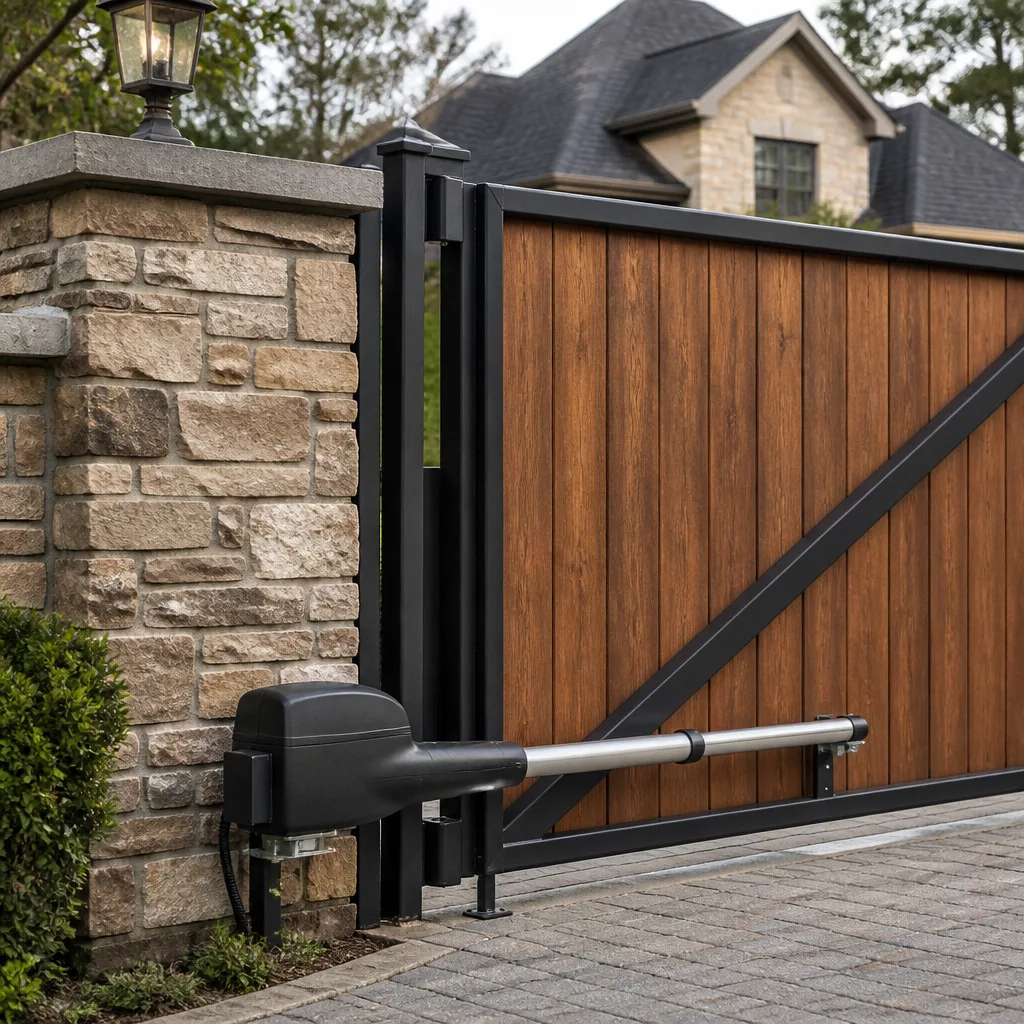
A gate opener is a motor, a gearbox, and a control board, all of which live outside or in a metal box bolted to a post within arm’s reach of every sprinkler, every rain event, and every ant colony in Garden Grove. The operator is the most fragile part of your gate system, and most opener failures are environmental before they are mechanical. Ants are the famous one around here. Argentine ants love the warmth inside a control board, and when they die in the relay contacts, the board fails in ways that look like every other electrical problem. We open operator boxes all over Garden Grove and find dead ant colonies occupying the boards. It is so common we check for it before we check voltage.
Moisture is the second killer. Outdoor operators need a weather-tight seal on the housing and a properly seated gasket on the access door. A gate opener in the wetter months is filling its lungs with cool, damp air every night, and that air condenses inside the housing. If the drainage holes are clogged with mud dauber nests or dried leaves, the water pools. We have pulled circuit boards out of housings with water still standing in the bottom.
Routine opener care looks like this: keep the housing sealed, keep the weep holes clear, check for ant trails and nests every season, and wipe down the outside of the unit so paint chips and rust don’t get a start. The same care applies to whatever brand sits on your driveway, whether it’s a Viking, a Ghost Controls unit, a DoorKing, or an Elite. Inside the box, leave the adjustments to someone with meter and manual in hand. Force settings, limit settings, and board diagnostics are not do-it-yourself work, and a mis-set force limit is a safety issue, not a performance tweak.
If the opener is more than ten years old and has never had internal service, the gear grease has hardened and the limit contacts have worn. An annual or biennial service from a qualified gate technician is the difference between an opener that lasts 8 years and one that runs 20. That’s not marketing. That’s gears and grease.
How Garden Grove’s Climate Attacks Your Gate
Garden Grove sits inland enough to escape the worst salt fog, but close enough to the coast that the morning marine layer is a fact of life from May through July. Steel gates pick up condensation on those mornings, and condensation plus scratches equals rust. A gate with intact paint and clean hardware shrugs off the marine layer without drama. A gate with chipped powder coat, a bare weld, or a scratched post will bloom orange in two seasons.
The more destructive force in Garden Grove is actually the soil. Most of the city sits on clay-heavy ground that absorbs water in the winter and shrinks hard in the summer. A gate post set in that soil moves. Not much, but enough. When the post moves and the gate stays, the gate binds. When the gate binds, the opener strains. When the opener strains, something fails: a gear, a board, a hinge, a wheel. This is why we tell local homeowners that the ground under the gate is part of the gate. You cannot maintain one without accounting for the other.
Santa Ana winds add their own layer. Every October and November, dry northeast winds push through the canyons and howl down the residential streets of Garden Grove with enough force to slam a taut gate leaf against its stop, bend the opener arm, or twist a double gate enough to crack a weld at the frame corner. The damage doesn’t always show for weeks, until a hairline crack rusts and the leaf sags past the point of correction.
Practical advice for this climate: keep the drainage around your gate posts clear, keep the paint touched up, and after every Santa Ana event, run the gate manually once just to feel for new drag. Your hands will tell you what your ears miss.
Safety Edges, Photo Eyes, and Why They Matter
An automated gate in California is a regulated piece of equipment. Under state law, any automatic gate must meet UL 325 safety standards, which means it needs working entrapment protection: safety edges, photo eyes, or both, depending on the gate type and how it was installed. The law exists because automatic gates have hurt and killed people, often children. A gate that does not stop and reverse when it meets resistance is not a slow gate. It is a hazard.
Safety edges are the rubberized strips along the leading edge of a sliding gate or the closing edge of a swing gate. They contain a pressure-sensitive switch that tells the opener to reverse when the edge deforms. Photo eyes are the two small lenses near the bottom of the gate opening that send an invisible beam across the gap. Break the beam, and the opener stops and reverses. Both of these need to work 100 percent of the time, with no exceptions, no workarounds, and no explanations for why it’s been disconnected.
In Garden Grove, where many homes have had automatic gates for decades and neighbors, kids, and delivery drivers routinely walk and ride past driveway openings, an inoperative safety edge is a lawsuit waiting to happen. We check them on every service call, whether the homeowner asked us to or not. A worn edge, a kinked wire, a failed relay on the board, a photo eye knocked out of alignment by a passing foot: any of these can disable the system silently. The gate still opens and closes. It just doesn’t protect.
Testing takes thirty seconds. With the gate closing, press firmly on the leading edge. The gate should stop and reverse immediately. For photo eyes, wave your hand through the beam. The gate should stop and reverse. Do this once a month. If either test fails, treat the opener as inoperable and call a gate professional. Repairing entrapment protection is not optional maintenance; it’s a safety requirement.
Common Mistakes to Avoid
- Greasing a worn hinge instead of replacing it. Grease quiets a bad hinge for a week, then the leaf sags further and the top hinge fails. If the pin is visibly worn or the leaf dips at the latch side, replace the hinge.
- Ignoring a small sag. A gate that is half an inch low at the catch side is telling you something is moving underneath it. Every month of ignored sag adds wear to the wheels, the opener arm, and the frame.
- Using WD-40 as a gate lubricant. WD-40 is a solvent-based water displacer, not a long-term lubricant. It rinses off and leaves dry metal behind. Use a penetrating oil or a proper hinge grease.
- Painting over rust without treating the metal. Painting traps the rust underneath, and in Garden Grove’s damp morning air, it spreads under the paint film. Surface prep comes before paint, always.
- Turning up opener force to overcome a dragging gate. If the gate binds and the opener struggles, raising the force limit so it “powers through” masks the problem and overloads the motor. Find the bind and fix it.
- Skipping the safety edge test because the gate seems fine. The system can fail silently and still open and close. Test the edges and photo eyes every month.
- Leaving sprinklers pointed at the gate or post. Overspray feeds rust and softens the soil around post footings. Redirect the spray. It costs nothing and saves everything.
When to Call a Professional
Some work on a gate is genuinely do-it-yourself: cleaning the track, wiping photo eyes, checking for loose bolts, keeping the weep holes clear. Other work is not. A snapped torsion spring or a high-tension cable on an automated gate can store enough energy to cause serious injury. Electrical work on openers means live voltage inside a metal housing. Post replacement requires cutting, concrete work, and correct weld repair. If you find a crack in a weld, a leaning post, a gate that binds no matter what you adjust, or an opener that trips breakers, stops mid-cycle, or refuses to reverse on the safety edge, the responsible move is to stop and call someone who does this every day. Ironworks Gate Co. offers free estimates in Garden Grove. Call (424) 395-4973, and a live person will answer.
Frequently Asked Questions
Inspect your gate every 60 to 90 days, and run the full 12-step checklist at the start of spring and fall. Garden Grove’s clay soil and seasonal rains shift posts and change gate alignment, so the local rhythm that works is every other month during mild weather and right after Santa Ana wind events or heavy rains. Call (424) 395-4973 if you find anything on the checklist that concerns you. Estimates are free.
Simple repairs like a replacement wheel or a hinge adjustment typically run between $150 and $500 in Garden Grove, while opener board replacement or post reset work can run $800 to $3,000 depending on the gate, the post condition, and the opener brand. The range is wide because the work is genuinely different from job to job. A written quote before any work starts is how we bid, and the price on that quote is the price you pay, settled before a single bolt is touched.
We dispatch emergency gate repairs in Garden Grove on the same day we get the call. Our phone lines are answered live 24 hours a day, 7 days a week, so you’ll speak to a person immediately, not a voicemail queue. Call (424) 395-4973 and we’ll have a technician to your driveway as fast as the schedule allows.
Yes. We are trained and equipped on nine gate-automation brands including Ghost Controls, Viking, DoorKing, and Elite, so the correct diagnostic gets made on the first visit no matter what unit was installed before you moved in. If you still have the manual, leave it by the operator. If you don’t, don’t worry. We carry the service documentation.
We work on old gates all the time in Garden Grove, and many original steel gates from the 1980s and 90s have decades of life left with the right hinge, wheel, and post work. We won’t sell you a new gate if your current one is serviceable. If the frame is cracked through, the post footing is gone, or the cost of repair exceeds the value of the gate, we will tell you that straight and give you a written price for either path.
A sagging gate is both, but it’s the danger that matters. A leaf that’s dropped at the latch side is loading its hinges past design, stressing the opener arm, and setting up a sudden failure where the gate twists into the driveway. Fix a small sag early and the repair is usually simple. Ignore it and the post, the frame, and the opener pay the price. Call (424) 395-4973 for an honest assessment.
The Bottom Line
A gate is a system: steel, concrete, motor, and electronics, all working together in an environment that is gently attacking them year-round. Maintain the gate on a seasonal rhythm, pay attention to the small signals, protect the safety systems, and don’t be afraid to call for help before a small problem becomes a structural failure. The homes in Garden Grove are worth maintaining, and the gate is the first thing that greets you and the last thing that protects you. This checklist is the working method our own technicians use, and we wrote it down because questions are free and breakdowns are not. Call (424) 395-4973 and talk to a person. We will be there when we say.
Written by Victor Salinas, Owner at Ironworks Gate Co., serving Garden Grove since 2013.