
Last updated August 25, 2026
Free on-site gate assessment - hinges, posts, and your LiftMaster or Nice gate operator checked before anything is quoted
The assessment is free and the quote is the invoice.
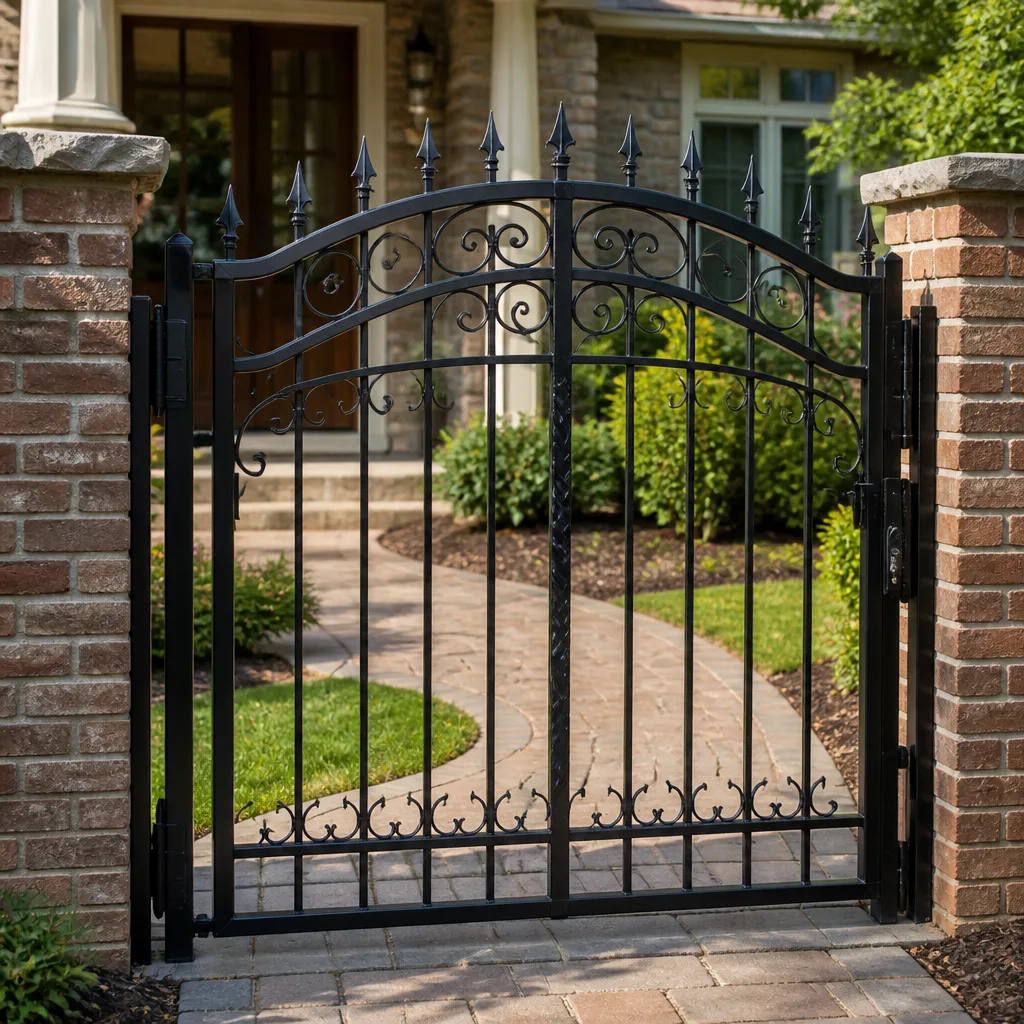
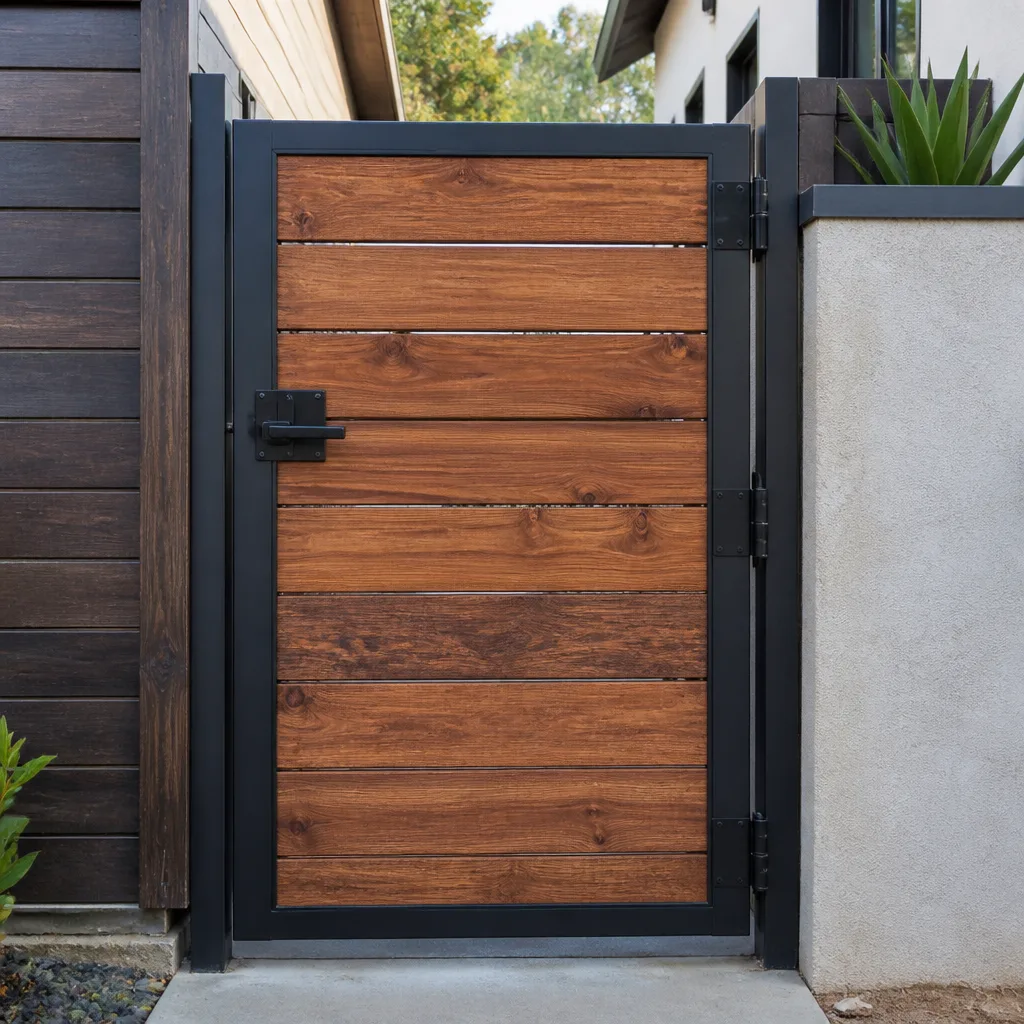
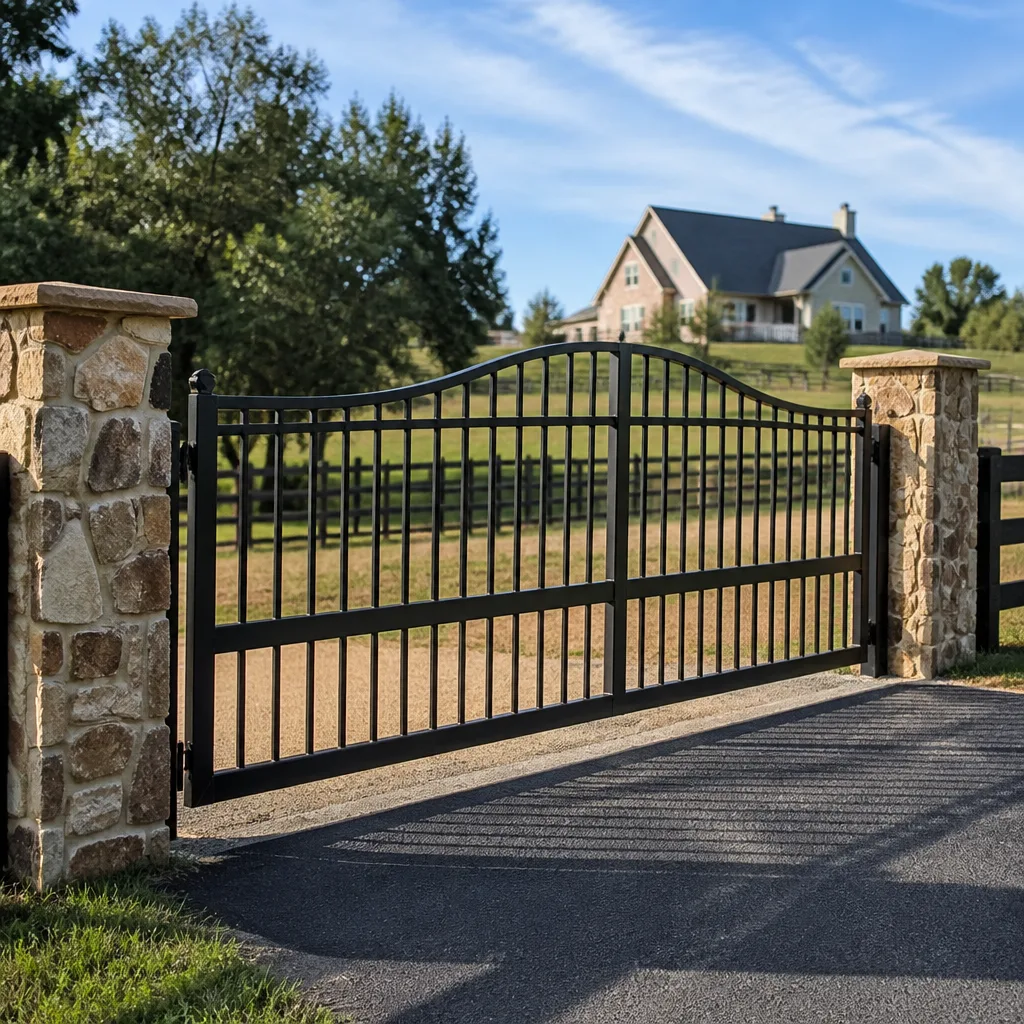
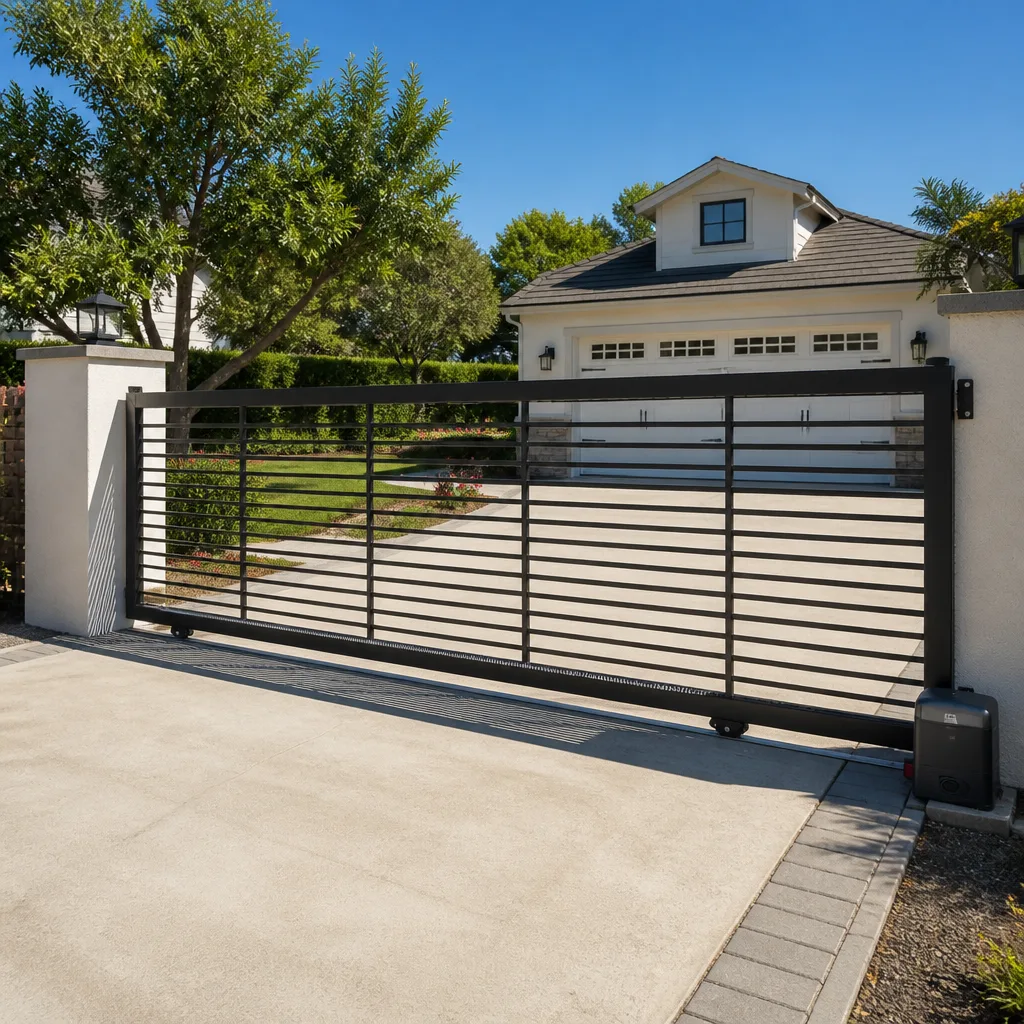
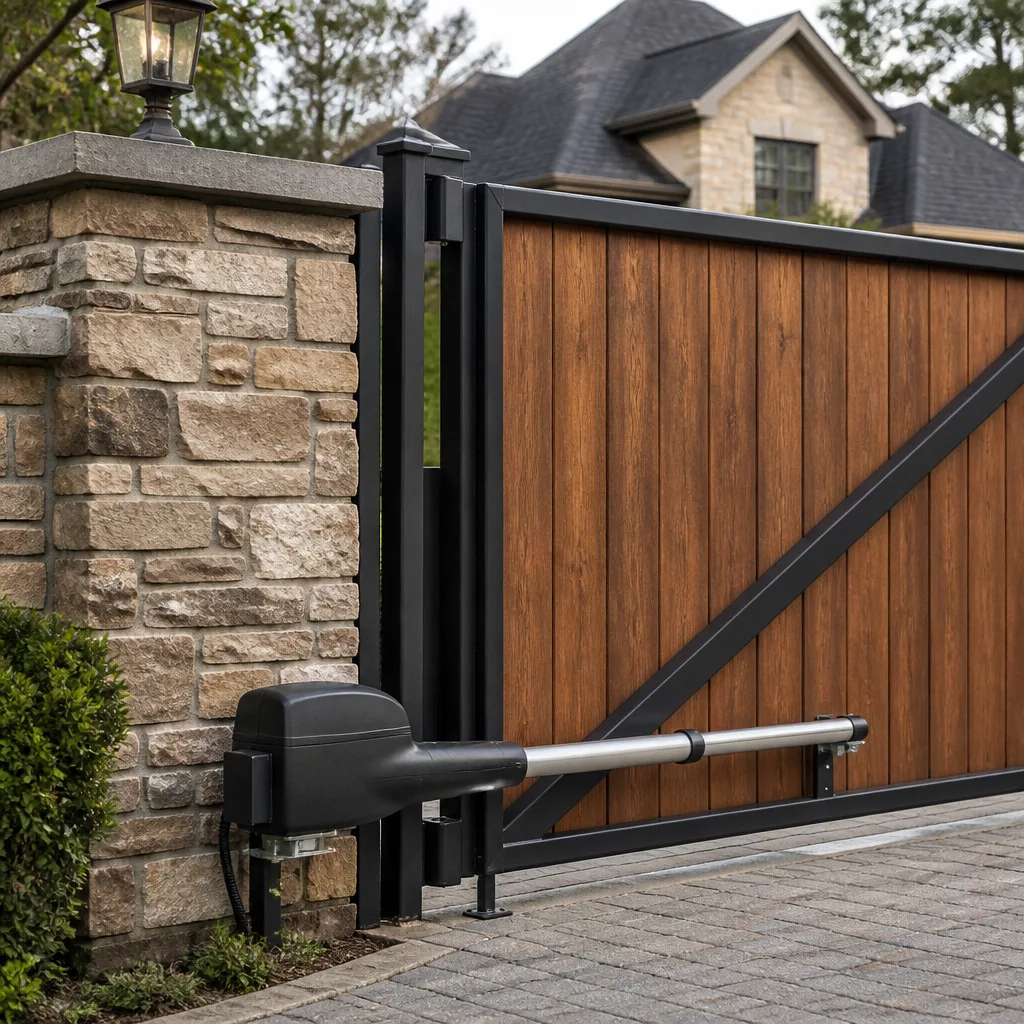
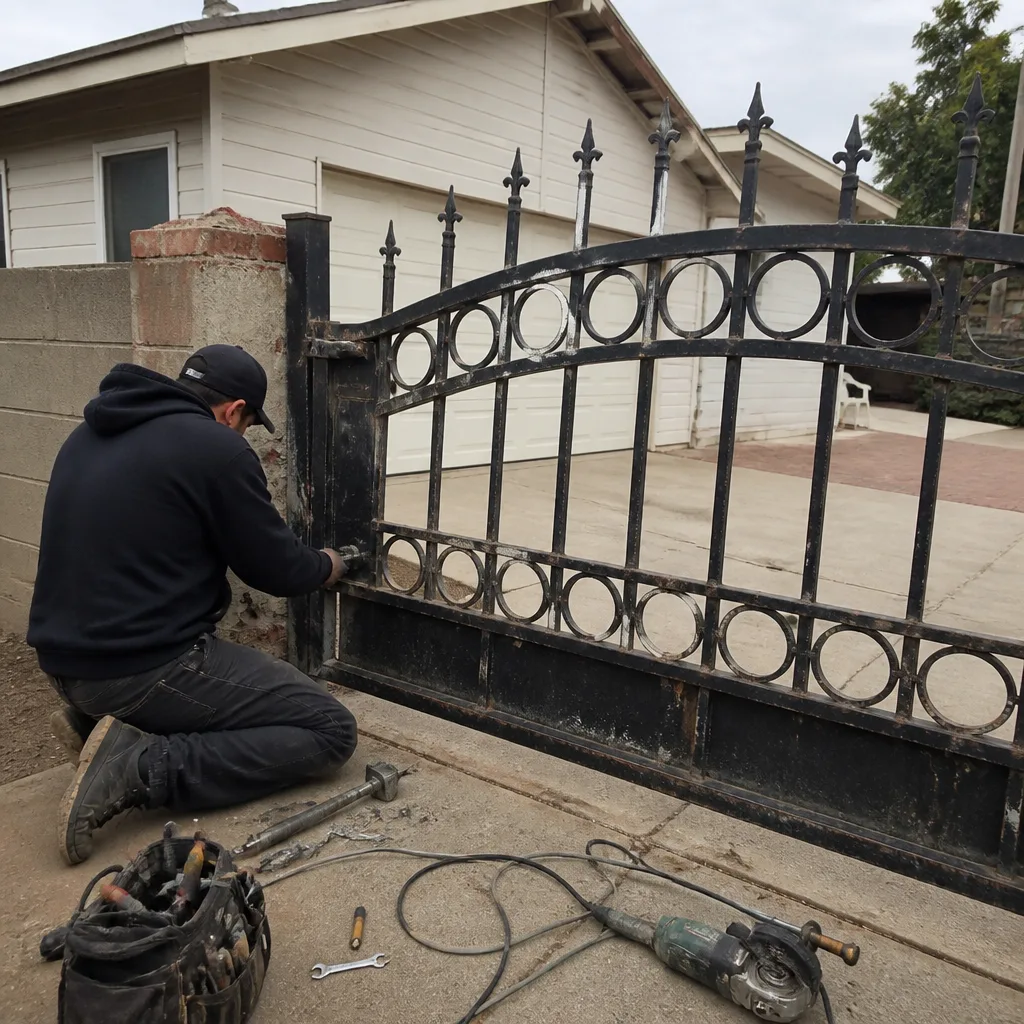 Before
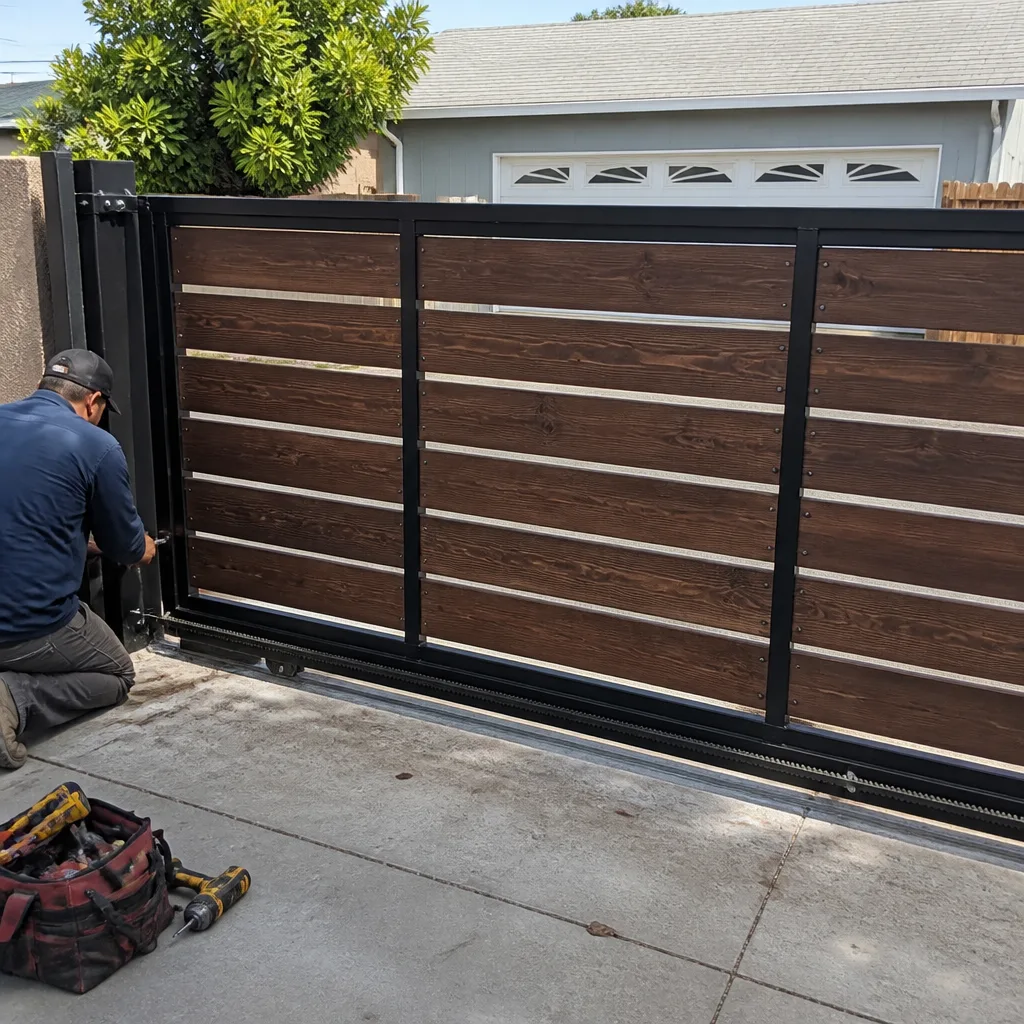 After
After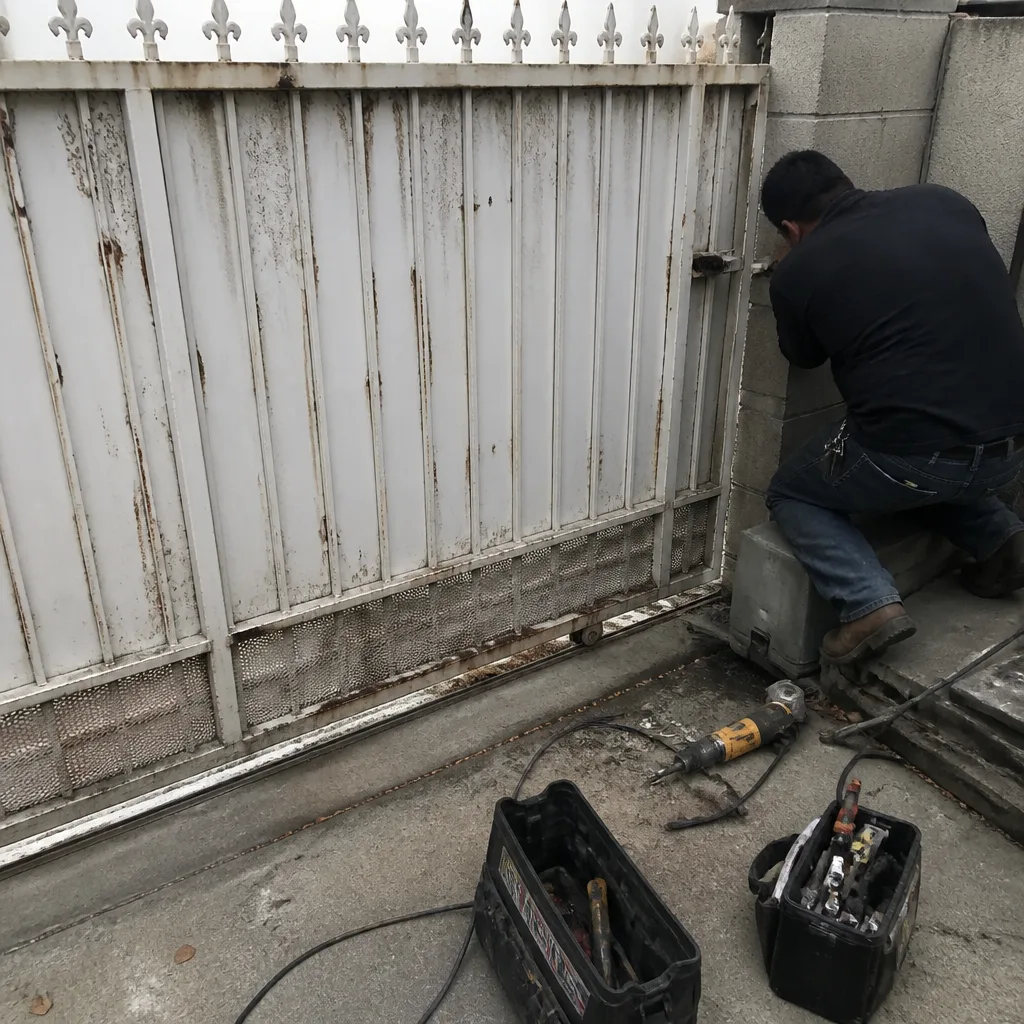 Before
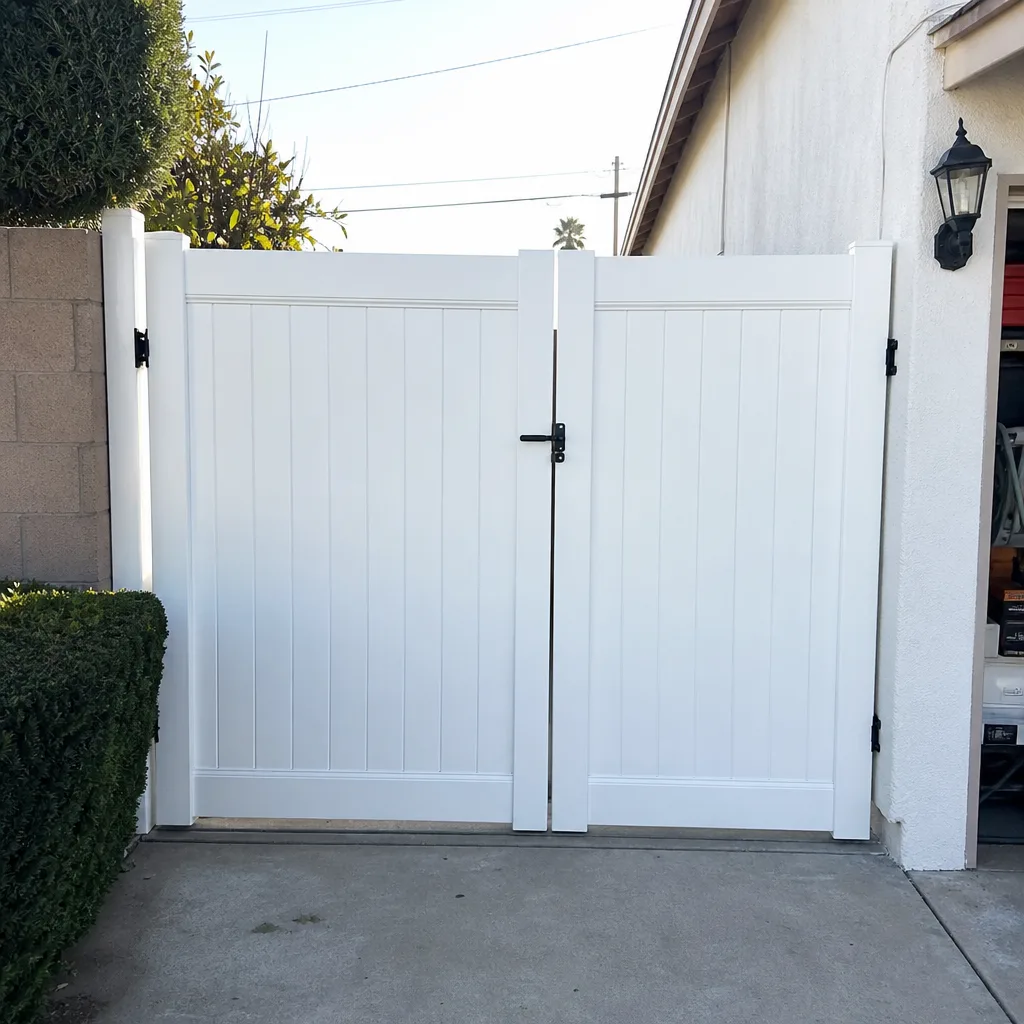 After
After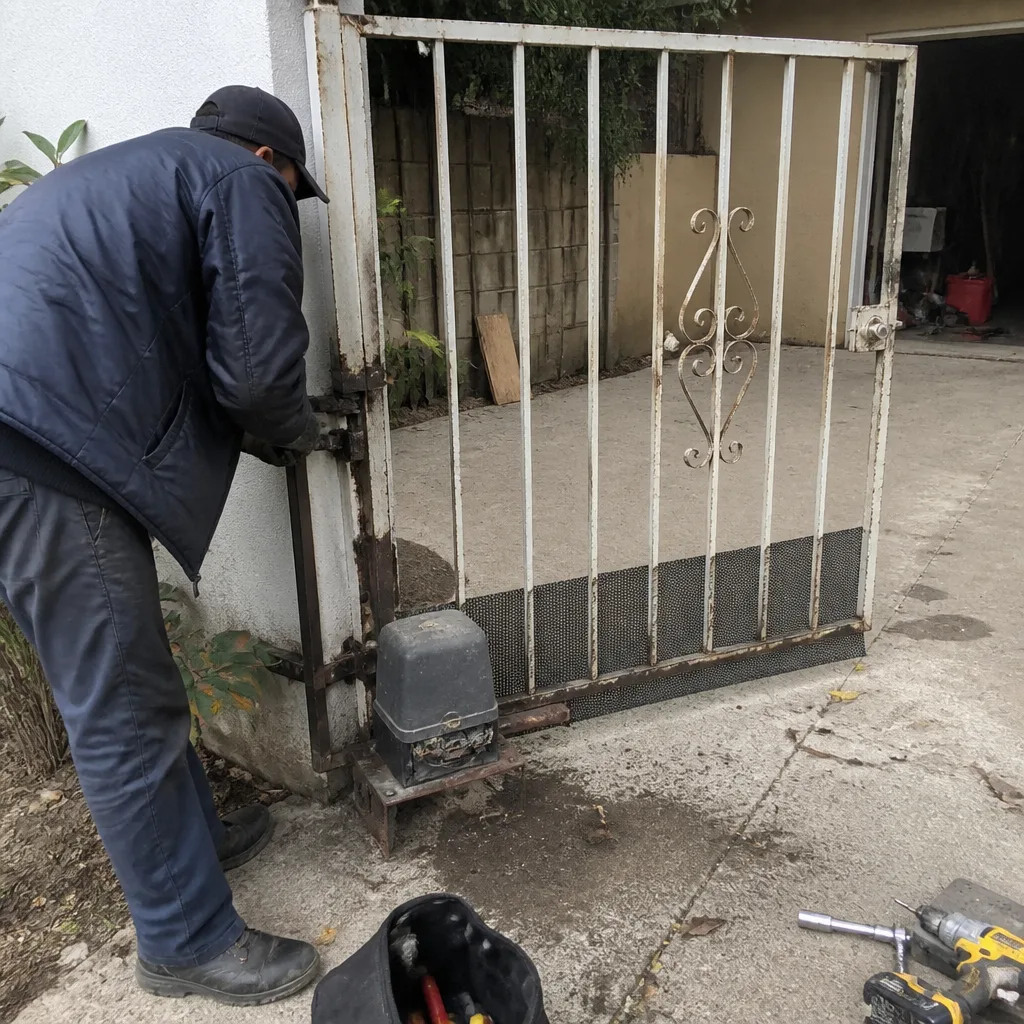 Before
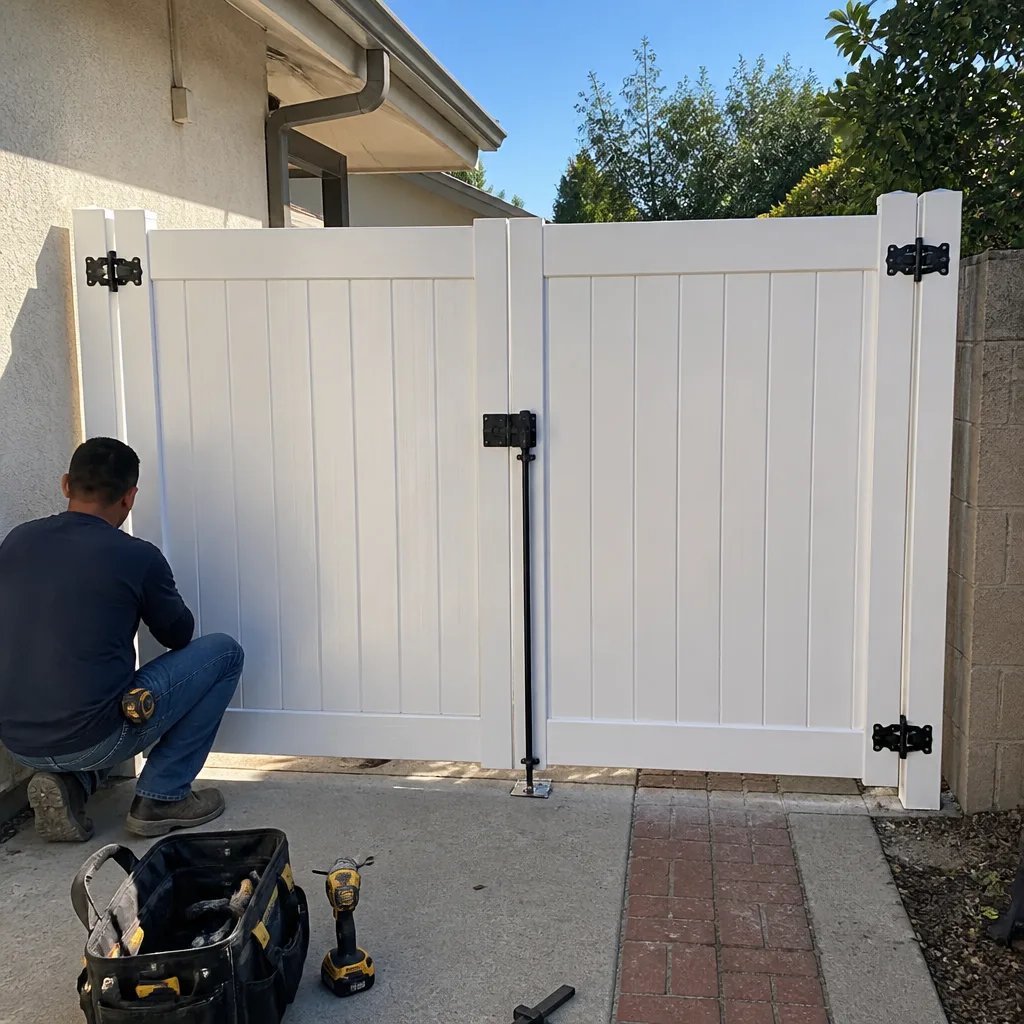 After
AfterDIY vs Professional Gate Repair: The Garden Grove Homeowner’s Decision Guide
Most homeowners don’t realize that a gate opener motor costs more to replace than the average gate repair job, yet it’s the first thing people try to fix themselves. This guide walks you through what’s actually safe to handle on your own, what will cost you more in the long run if you attempt it without the right training, and how Garden Grove’s specific climate and code requirements shape those decisions. By the time you finish reading, you’ll know exactly which repairs belong in your hands and which belong in ours.
Quick Answer
DIY gate repair makes sense for simple, low-risk tasks like tightening loose hardware, cleaning sensor lenses, and lubricating hinges with the right product. Professional repair is the right call for anything involving springs, cables, motors, circuit boards, or structural welding, where a mistake can cause injury, damage the gate, or void your opener’s warranty. In Garden Grove, most homeowners find that roughly 80 percent of what they hoped to fix themselves ends up needing a technician anyway, which is why we offer free estimates so you know the cost before committing to anything.
Table of Contents
- What You Can Safely DIY (and What You Shouldn’t)
- The Real Cost of DIY Gate Repair in Garden Grove
- Garden Grove Climate and Your Gate: What Fails First
- Gate Springs, Cables, and the Injury Risk Nobody Talks About
- Automation and Opener Repair: When Circuit Boards Win
- Welding and Structural Repair: The Point of No Return
- Permits and Code in Garden Grove: What Homeowners Need to Know
- How to Evaluate a Gate Repair Company in Garden Grove
- Common Mistakes to Avoid
- When to Call a Professional
- Frequently Asked Questions
- The Bottom Line
What You Can Safely DIY (and What You Shouldn’t)
The line between a DIY gate fix and a professional gate repair is drawn in two places: your physical safety and the cost of getting it wrong. We’ve seen Garden Grove homeowners save a few hundred dollars on a hinge replacement only to spend three times that amount correcting the damage when the gate sagged and stripped the opener gears. Here’s the honest breakdown.
Safe to handle on your own:
- Tightening loose bolts on hinges, brackets, and opener arms with a socket wrench
- Cleaning photo-eye sensor lenses with a soft, dry cloth when the gate refuses to close
- Lubricating hinges and rollers with a silicone-based or lithium-based lubricant (never WD-40, which attracts dust and gums up)
- Replacing remote control batteries and reprogramming remotes using your opener’s manual
- Clearing small debris, leaves, or cobwebs from the gate track
- Adjusting the gate’s open and close limit switches using the opener’s adjustment screws
Leave to a professional:
- Replacing or adjusting torsion springs and extension springs (these store enormous tension)
- Any repair involving cables, chains, or pulleys under load
- Motor replacement or circuit board diagnosis on any automated opener
- Welding cracked frames, broken pickets, or failing hinge mounts
- Repairing or replacing underground conduit or low-voltage wiring
- Any structural work affecting how the gate hangs, swings, or slides
The rule of thumb we give every homeowner in Garden Grove is simple: if the part you’re about to touch is under tension or connected to electricity, call someone who does this every day. A hinge bolt is one thing. A torsion spring is a different animal entirely, and we’ve seen what happens when that animal is poked incorrectly.
Ironworks Gate Co. home has served Garden Grove for over 42 years, and we’ve built our reputation on telling homeowners the truth about what needs fixing and what doesn’t.
The Real Cost of DIY Gate Repair in Garden Grove
When homeowners ask us whether DIY is cheaper, the honest answer is: it depends on what breaks and how much you value your weekend. But the numbers tell a useful story, and we believe in putting them on the table.
Typical DIY costs in Garden Grove:
- Replacement hinge set: $25 to $60 at local hardware stores, plus 2-4 hours of your time if everything goes smoothly
- Sensor cleaning supplies: $5 to $15, plus 30 minutes
- Lubricant and basic tools: $20 to $40 if you already own a socket set
- Replacement remote: $30 to $75 depending on the opener brand, plus programming time
Typical professional repair costs in Garden Grove (what we quote, before any discounts):
- Hinge replacement with alignment and opener rebalancing: $180 to $320
- Sensor replacement or alignment: $120 to $250
- Opener motor replacement: $450 to $900 depending on the model and brand
- Full gate re-welding and reinforcement: $350 to $1,200 depending on the extent of the damage
- Circuit board replacement: $250 to $600, with programming included
Here’s the part most DIY calculations miss: when a hinge fails and you replace just the hinge, the gate still sags because the post has shifted or the other hinges are worn. You’ve spent $40 and four hours solving one-third of the problem. When we replace a hinge, we check the post, the other hinges, the opener’s force settings, and the gate’s overall balance, because a hinge failure is usually a symptom of something upstream. That’s the difference between a repair and a fix, and it’s why a $280 professional hinge job often ends up cheaper than the $40 DIY version that has to be redone in six months.
We also offer $50 off any repair over $250 and a free second opinion on any written estimate. If a competitor has quoted you a price, bring it to us and we’ll tell you honestly whether it’s fair, low, or inflated.
Garden Grove Climate and Your Gate: What Fails First
Garden Grove sits about ten miles inland from the Pacific, which means our climate is mild but not gentle on metal. The marine layer rolls in most mornings, especially from May through July, and that moisture combines with warm afternoon sun to create a condensation-and-heat cycle that accelerates rust on unprotected steel. We’ve repaired gates in the West Garden Grove neighborhoods near Euclid Street that rusted through in five years while identical gates in Anaheim lasted twelve, all because of where the morning fog lingers.
Here’s what Garden Grove’s climate does to gates, in our experience:
- Hinge and bracket rust – Morning marine layer moisture sits on metal surfaces, and if the factory powder coating has a single scratch, rust starts there and spreads underneath the finish. Within two or three years, hinges lose their smooth action and begin to bind.
- Opener motor strain – A gate that starts binding due to rust forces the opener to work harder. Motor life drops from an expected 10-12 years to 5-7 years when the gate isn’t moving freely.
- Sensor misalignment – Temperature swings between cool mornings and warm afternoons cause metal gates and posts to expand and contract slightly. Over time, this shifts photo-eye sensors out of alignment, which is why so many Garden Grove homeowners find their gate suddenly refusing to close for no apparent reason.
- Wood trim and composite gate swelling – Homes with wood or composite gates face a different issue: the moisture cycle causes swelling and warping, which throws off the gate’s weight distribution and strains the hinges.
- Underground wiring corrosion – Less common but we see it: low-voltage wiring runs to keypads and vehicle sensors develop corrosion in Garden Grove’s occasionally damp soil, especially in older installations from the 1980s and 1990s.
The practical takeaway: regular lubrication and a seasonal inspection matter more in Garden Grove than in drier inland cities. Our $89 seasonal tune-up includes lubrication, sensor cleaning and alignment, force-setting checks, and a visual inspection of all hinges, brackets, and wiring. It’s the cheapest insurance a gate owner can buy, and it catches small problems before they become $800 repairs.
Gate Springs, Cables, and the Injury Risk Nobody Talks About
We’re going to be direct here: gate springs and cables are dangerous. Not “be careful” dangerous. “Emergency room” dangerous. A torsion spring on a driveway gate stores thousands of pounds of tension, and when that tension releases suddenly, the spring becomes a projectile. Every year, homeowners across the country are seriously injured attempting spring replacements without the proper winding bars and training.
What homeowners should know about gate springs:
- Torsion springs on gates function similarly to garage door springs, and they carry comparable stored energy. The difference is that gate springs are often exposed to the elements, which means corrosion weakens them unpredictably.
- Extension springs stretch and contract with every gate cycle. When one breaks, the gate slams shut or swings freely, and the broken spring can fly several feet.
- Cables under tension can snap and whip, causing severe lacerations or eye injuries.
- A gate that slams shut due to a broken spring weighs 400 to 800 pounds or more. No one should be standing in its path, which is why we tell homeowners to keep children and pets away from a malfunctioning gate until it’s secured.
Our recommendation, stated plainly: do not attempt to replace or adjust any gate spring or cable yourself. This is not a matter of skill or intelligence; it’s a matter of having the right tools, the right training, and the right safety procedures. We’ve repaired gates where homeowners tried the DIY spring route. Some were lucky. Some paid us to fix their mistakes. None of them saved money in the end.
Victor Salinas, who leads our team, has trained every technician on proper spring safety protocols. It’s one of the first things he teaches, and it’s non-negotiable on every job.
Automation and Opener Repair: When Circuit Boards Win
Modern gate openers are computers with motors attached. A Viking or Ghost Controls opener from 2015 might look simple on the outside, but inside there’s a circuit board managing force settings, obstacle detection, wireless communication, and battery backup logic. When something goes wrong, the symptom is often misleading: the gate opens halfway and stops, or the remote works intermittently, or the keypad accepts the code but nothing happens.
Here’s what DIY troubleshooting typically looks like:
- Homeowner checks the breaker and the outlet. Gate still doesn’t work.
- Homeowner replaces the remote battery. Gate still doesn’t work.
- Homeowner unplugs the opener and plugs it back in. Gate works for a day, then stops again.
- Homeowner searches online, finds a forum post, and tries adjusting a random screw. Gate behavior gets worse.
- Homeowner calls us. We diagnose the actual problem in under an hour.
We’re not mocking anyone. We’re describing the almost universal sequence, because opener problems are rarely what they appear to be. A gate that opens halfway is often a force-setting issue triggered by a binding hinge, not a motor problem. A keypad that stops working is usually a wiring issue or a control board input failure, not the keypad itself. A remote that works “sometimes” is frequently a receiver antenna problem or interference from a nearby device, not a dying opener.
We service nine major opener brands, including Viking, Ghost Controls, DoorKing, and Elite, and we’ve learned that each brand has its own failure patterns and diagnostic quirks. A technician who only knows one or two brands will guess. A technician who knows nine will know the difference between a Viking control board issue and a DoorKing limit switch problem within minutes of opening the cover.
There’s one more factor: warranties. Most opener manufacturers void the warranty if unauthorized repairs are attempted. We’ve seen homeowners open the control board housing, find nothing obviously wrong, and discover later that their warranty is gone because the tamper seal was broken. That’s an expensive lesson, and it’s one reason we tell homeowners to keep the cover closed.
Welding and Structural Repair: The Point of No Return
Structural gate repair is where DIY becomes impossible for almost every homeowner, because it requires skills and equipment that take years to develop and thousands of dollars to acquire. When a gate frame cracks, when a hinge mount tears away from the post, when a weld fails and the gate sags at a visible angle, the fix involves a welder, proper surface preparation, and an understanding of how the gate carries its weight.
What structural failure looks like on a Garden Grove driveway gate:
- Visible cracks in the metal frame, especially at stress points where horizontal rails meet vertical pickets
- A gate that drags on the ground or scrapes against the post on one side
- Hinge pins that lean at an angle, indicating the post has shifted or the hinge mount has deformed
- Rust that has penetrated through the metal, leaving holes or flaking layers
- A gate that shakes or rattles excessively when opening and closing
We weld gates back together properly: we grind out the crack, reinforce the area with additional metal where needed, and weld with the correct amperage and rod for the gate’s specific steel or aluminum composition. Then we rebalance the gate, adjust the opener’s force settings, and confirm the gate swings true before we leave. A gate repair done right shouldn’t be visible as a repair; it should look like the gate never broke.
This is where our 42 years of service matters most. We were founded in 1984, and Victor Salinas has been leading the company with the same philosophy since day one: the 400th job gets the same care as the first. A weld we make today should still be holding in 2040, long after the homeowner has forgotten what the original crack looked like.
Permits and Code in Garden Grove: What Homeowners Need to Know
Garden Grove’s building code has specific requirements for driveway gates, particularly when the gate is automated. Many homeowners don’t realize that an automated gate is treated differently from a manual gate under California code, and the rules exist for safety reasons. Automated gates must have proper safety devices, force-sensitivity settings, and in some cases, specific clearance requirements.
What Garden Grove homeowners should know:
- Automated gates must be equipped with operational safety devices, typically photo-eye sensors or edge sensors, that prevent the gate from closing on a person, vehicle, or animal.
- Force settings on gate openers must be adjusted so the gate stops or reverses when it encounters resistance. A gate that pushes through an obstruction is a code violation and a serious safety hazard.
- Some gate installations or major modifications require a city permit, depending on the scope of work and whether the gate is visible from the street. Replacement of existing openers and direct repairs typically do not require permits, but new gate construction often does.
- Fire access requirements may apply in certain Garden Grove neighborhoods, particularly for gates that block access to a property. Emergency personnel need to be able to enter, which is why many gates have emergency release mechanisms.
The honest truth: most homeowners don’t need to become code experts to own a gate. That’s our job. When we install or repair a gate in Garden Grove, we build it to comply with current code, and we verify safety systems are functional before we leave. A gate that works but doesn’t comply with safety standards is a liability, and we’d rather tell you it needs an extra safety device than leave you with a gate that could hurt someone.
How to Evaluate a Gate Repair Company in Garden Grove
If you’ve decided to call a professional, the next question is who. Garden Grove has no shortage of handymen and general contractors who will claim to fix gates, but gate repair is a specialty, and the difference between a specialist and a generalist shows up in the quality of the work and how long it lasts.
Here’s what to look for when you’re evaluating a gate repair company:
- Ask whether gates are their primary business. A company that fixes gates, garage doors, fences, and does general handyman work is a generalist. There’s nothing wrong with generalists for certain jobs, but a complex automated gate deserves a specialist.
- Ask which opener brands they service. If the answer is “all of them” without naming any, be cautious. A competent gate company can name the brands they’re trained on. We service nine major brands: LiftMaster, FAAC, BFT, Linear, Viking, Ghost Controls, DoorKing, Elite, and Mighty Mule.
- Ask about their guarantee in writing. Every job we complete is covered by our 90-Day Done Right Promise, known internally as the Keystone Standard. It’s a written guarantee, no paperwork, no arguing: if it’s not right, we come back and make it right. Every time, on every job.
- Ask about pricing before the work starts. You should know the price before a single bolt is turned. We quote upfront, settle the price, and do the work. No surprises on the bill.
- Call and see who answers. A live person answers our phone 24 hours a day, 7 days a week. Not a voicemail, not an answering service. If you call at 2 a.m. because your gate is stuck open and your car is outside, a human being picks up.
- Ask whether technicians are background-checked and uniformed. Our technicians are background-checked and work in your home the way they would work in their own mother’s house. That’s the standard.
One more thing worth saying: we’re not the cheapest option in Garden Grove, and we’re comfortable with that. We’re the company that fixes the gate correctly the first time, stands behind the work in writing, and answers the phone when you call. Homeowners who have lived in their homes for twenty years and plan to stay another twenty tend to value that more than saving $75 on a repair that fails in eight months.
Common Mistakes to Avoid
- Using WD-40 on gate hinges and rollers. WD-40 is a water displacement product, not a lubricant. It cleans away old lubricant and leaves metal with less protection than it had before. Use a silicone-based or lithium-based lubricant instead, or let us handle lubrication during a tune-up.
- Adjusting the opener’s force settings without understanding what they do. Some homeowners turn up the force when a gate starts binding, which masks the underlying problem and puts extra strain on the motor. A binding gate needs its hinges or alignment fixed, not more opening force.
- Ignoring a gate that’s getting slower. A gate that opens more slowly than it used to is telling you something. It might be low lubricant, a worn capacitor, or a motor nearing the end of its life. Ignoring it turns a $150 fix into a $700 motor replacement.
- Replacing one hinge and calling it done. Hinges wear together. When one fails, the others have been carrying extra weight and are usually worn too. Replace them as a set, and check the post alignment while you’re at it.
- Attempting spring or cable replacement without proper tools. We covered this above, but it bears repeating: gate springs and cables are dangerous. Don’t touch them. Call someone who does this every day.
- Buying a cheap universal opener online and expecting it to last. Universal openers are built to a price point, not a performance standard. We’ve removed plenty of them after two or three years when they failed, and the homeowners ended up paying for the cheap opener plus the proper replacement. Buy once, buy right.
- Not testing the safety reversal after any repair or adjustment. After any work on a gate or opener, test that the gate reverses when it encounters an obstruction. If it doesn’t, the safety system is not working, and that gate is dangerous.
When to Call a Professional
You should call a professional when the repair involves springs, cables, motors, circuit boards, welding, or structural components. You should also call when you’ve tried the simple fixes and the gate still isn’t working right, because continued guessing usually makes the problem more expensive. And you should call before you buy any parts online, because we can often diagnose the actual issue over the phone in a few minutes and save you from purchasing the wrong component. Ironworks Gate Co. offers free estimates in Garden Grove, call (424) 395-4973 and we’ll come out, look at your gate, and give you a straight answer. If we can fix it on the spot, we’ll quote the price before we touch anything. If you don’t need a repair, we’ll tell you that too.
We also offer a free second opinion on any written estimate from another company. If you’ve been quoted a price and want an honest assessment of whether it’s fair, bring it to us. We’ll look at the gate and tell you the truth. And for our senior and veteran neighbors in Garden Grove, there’s a permanent 5% discount on every job, always.
Frequently Asked Questions
Gate repair in Garden Grove typically costs between $120 and $900 depending on the problem, with simple fixes like sensor realignment or hinge lubrication at the lower end and motor replacement or structural welding at the higher end. Most repairs we complete fall between $180 and $400. Call (424) 395-4973 for an exact quote, estimates are free.
In most cases, yes. Our technicians complete most jobs in a single visit, and we carry common parts for Viking, Ghost Controls, DoorKing, and Elite openers on our trucks. If your problem requires a specialized part we don’t have in stock, we’ll order it and return as soon as it arrives, and you’ll know the timeline before we leave.
The most common gate problem in Garden Grove is hinge wear combined with opener strain, usually caused by the marine layer moisture accelerating rust on unprotected metal. Hinges bind, the opener works harder, and eventually either the hinge fails or the motor burns out. Regular lubrication and seasonal tune-ups prevent most of these failures.
Yes, welding is a core part of our business. We repair cracked frames, torn hinge mounts, sagging gates, and rusted structural components. We’ve been welding gates since 1984, and Victor Salinas has built the company’s reputation on welds that hold for decades.
A full gate installation includes site assessment, gate fabrication or ordering, post setting, hinge installation, gate hanging and balancing, opener installation (if automated), safety device installation, programming of remotes and keypads, and final testing. We handle the complete scope from hinges and welds to keypads and automation. Call (424) 395-4973 for a free measure and written price.
Yes, we handle low-voltage power runs, conduit installation, photo-eye sensors, safety edges, and all required safety devices for automated gates in Garden Grove. Safety compliance is part of every automated gate job we complete, and we test the reversal function before we leave. Call (424) 395-4973 to schedule an assessment.
Because we specialize exclusively in gates. A handyman fixes gates sometimes; we fix gates every day, across nine major opener brands, with 42 years of experience in Garden Grove. Every job is covered by our written 90-Day Done Right Promise, and a live person answers our phone 24 hours a day, 7 days a week. You’ll know the price before we start, and you’ll have a written guarantee when we finish.
The Bottom Line
DIY gate repair has its place: tighten a loose bolt, clean a sensor, replace a battery. Those are five-minute fixes that any homeowner can handle. But the moment you’re looking at a spring under tension, a motor that hums but doesn’t move, a cable that looks frayed, or a weld that’s cracked, the math changes. The cost of getting it wrong, in dollars and in safety, exceeds the cost of calling someone who does this work every day. Ironworks Gate Co. has been serving Garden Grove for over 42 years, and we stand behind every job with a written 90-Day Done Right Promise. Call (424) 395-4973 for a free estimate, and we’ll give you a straight answer about your gate. Done right, and backed in writing.
Written by Victor Salinas, Owner at Ironworks Gate Co., serving Garden Grove since 2013.