
Last updated August 25, 2026
Free on-site gate assessment - hinges, posts, and your LiftMaster or Nice gate operator checked before anything is quoted
The assessment is free and the quote is the invoice.

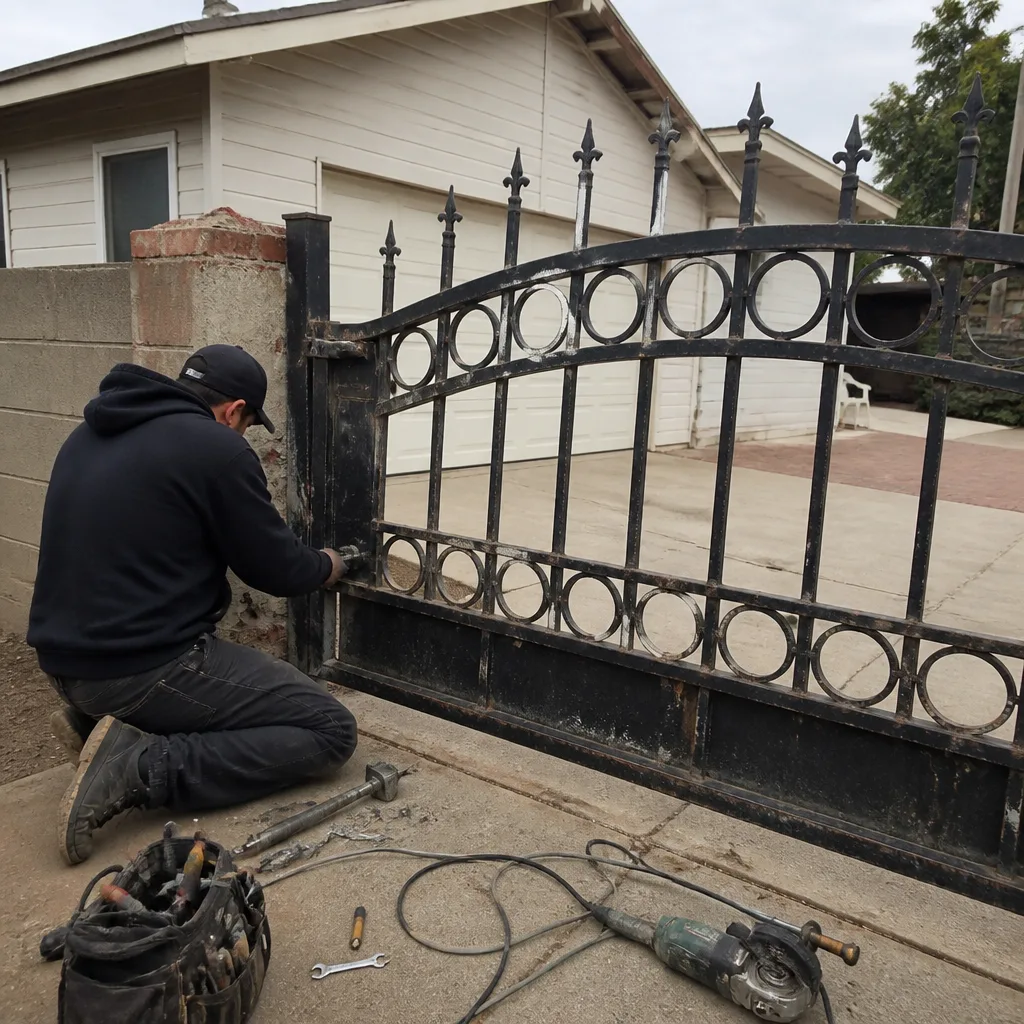 Before
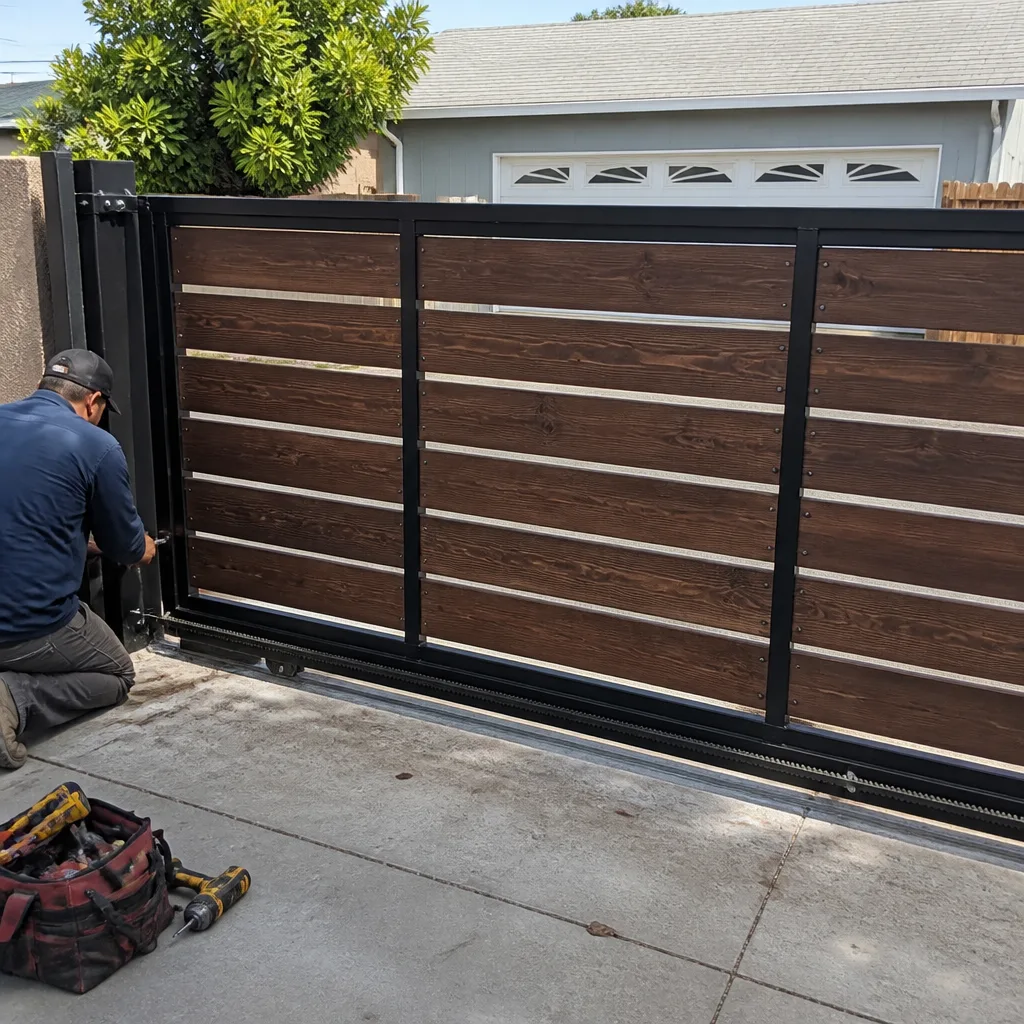 After
After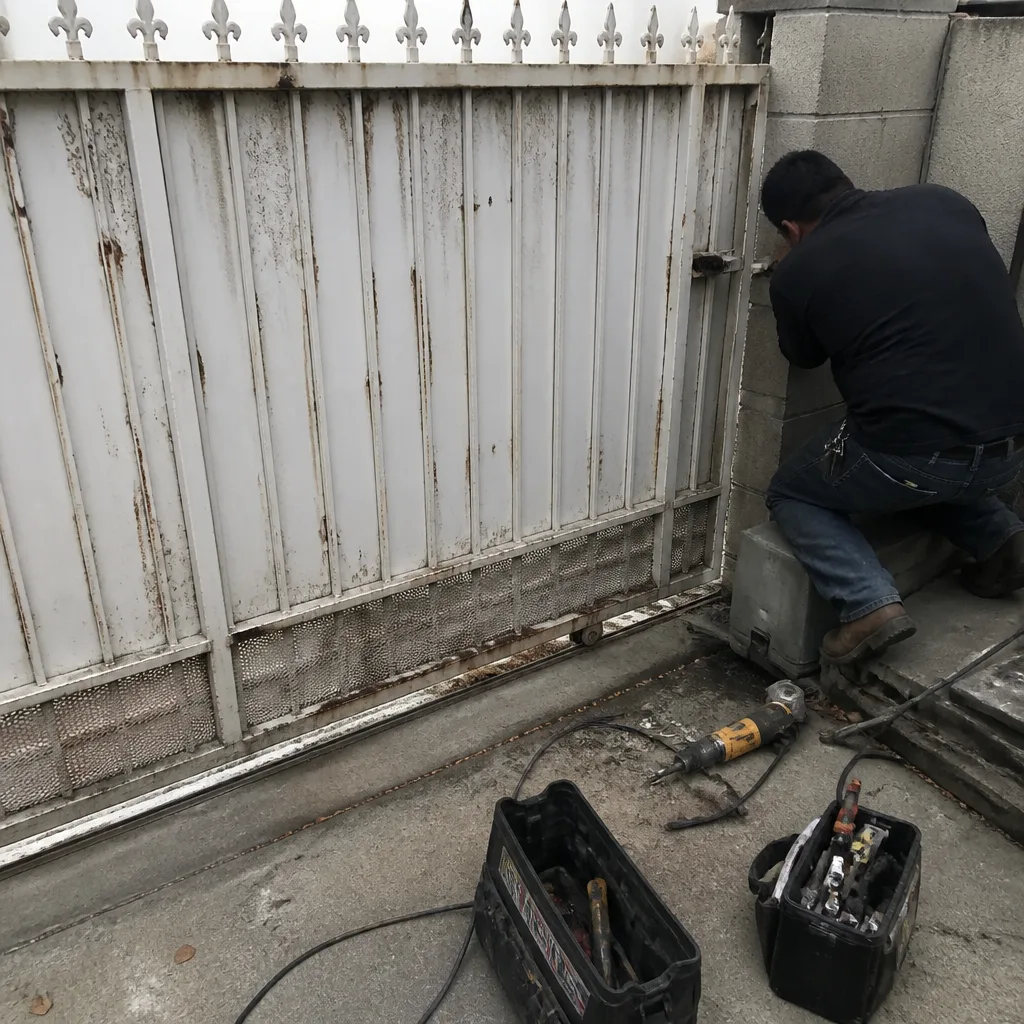 Before
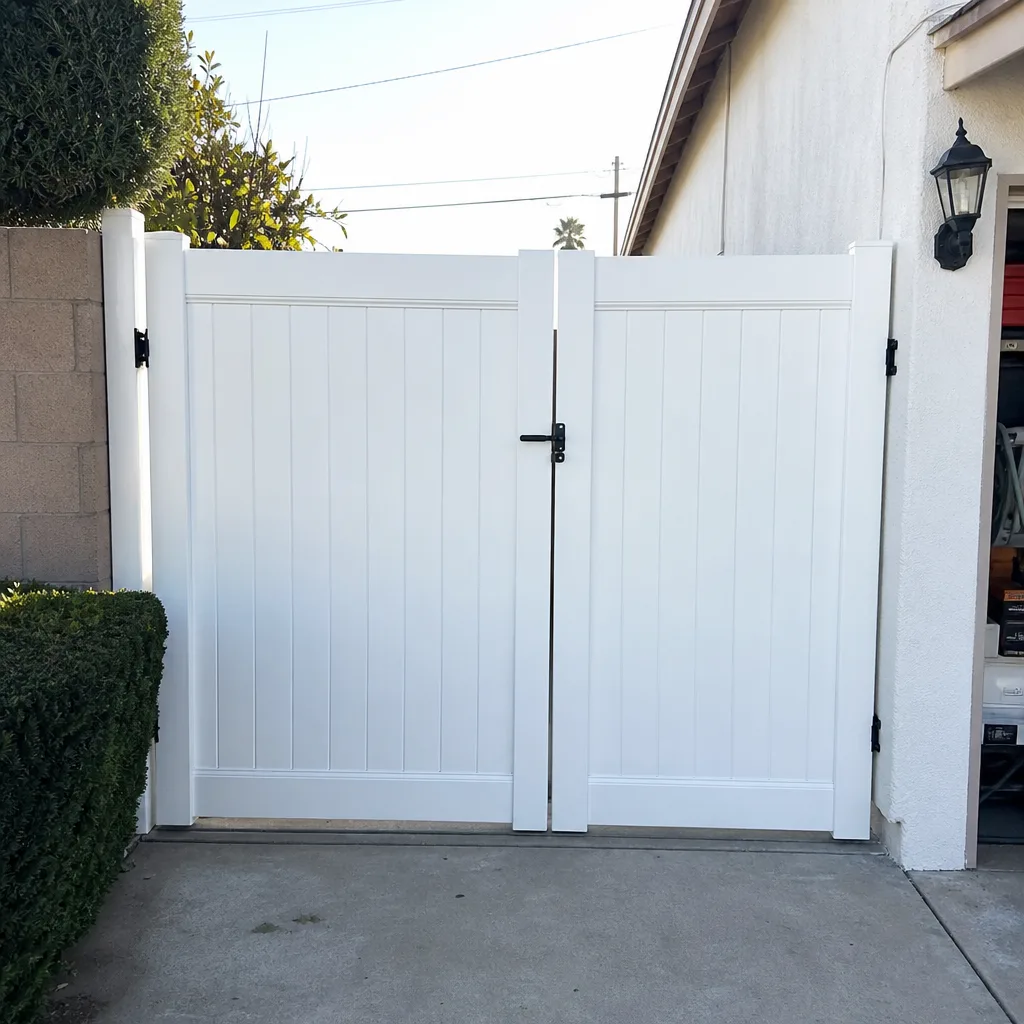 After
After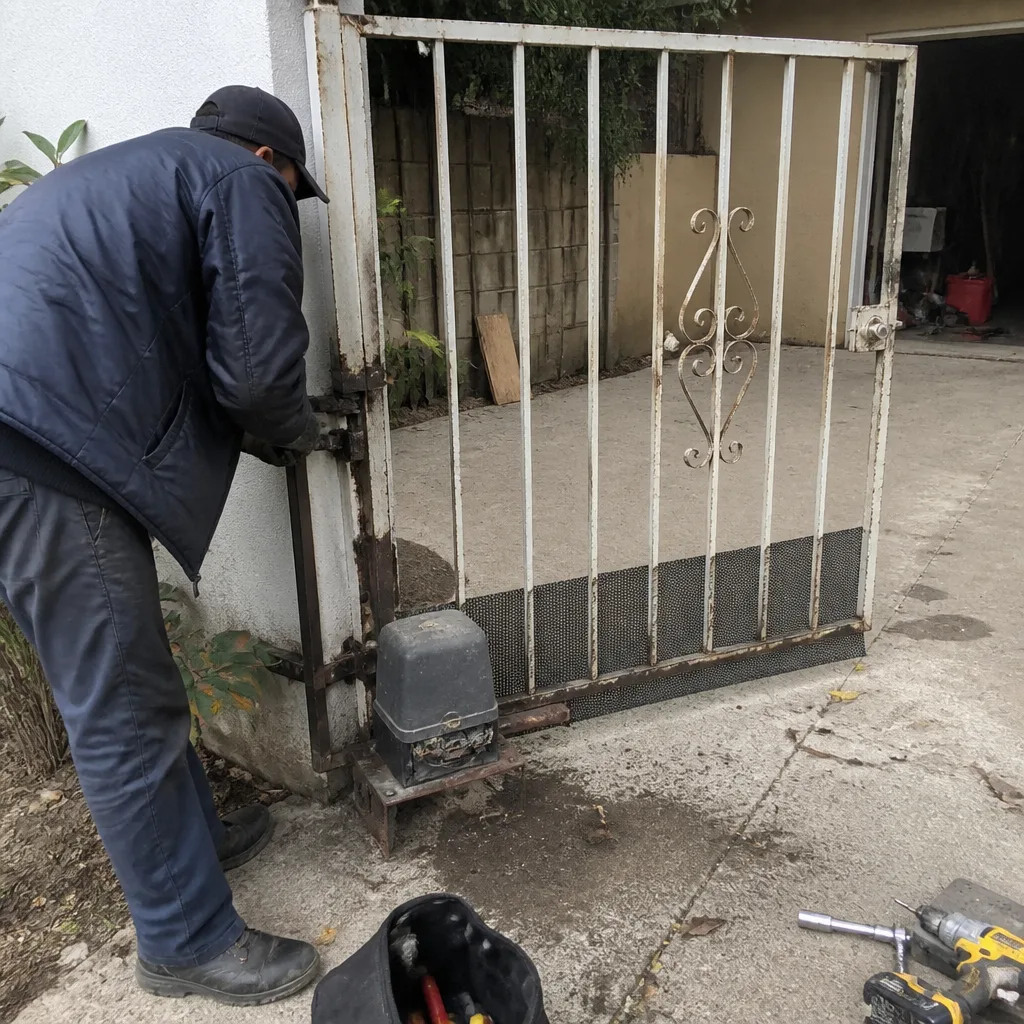 Before
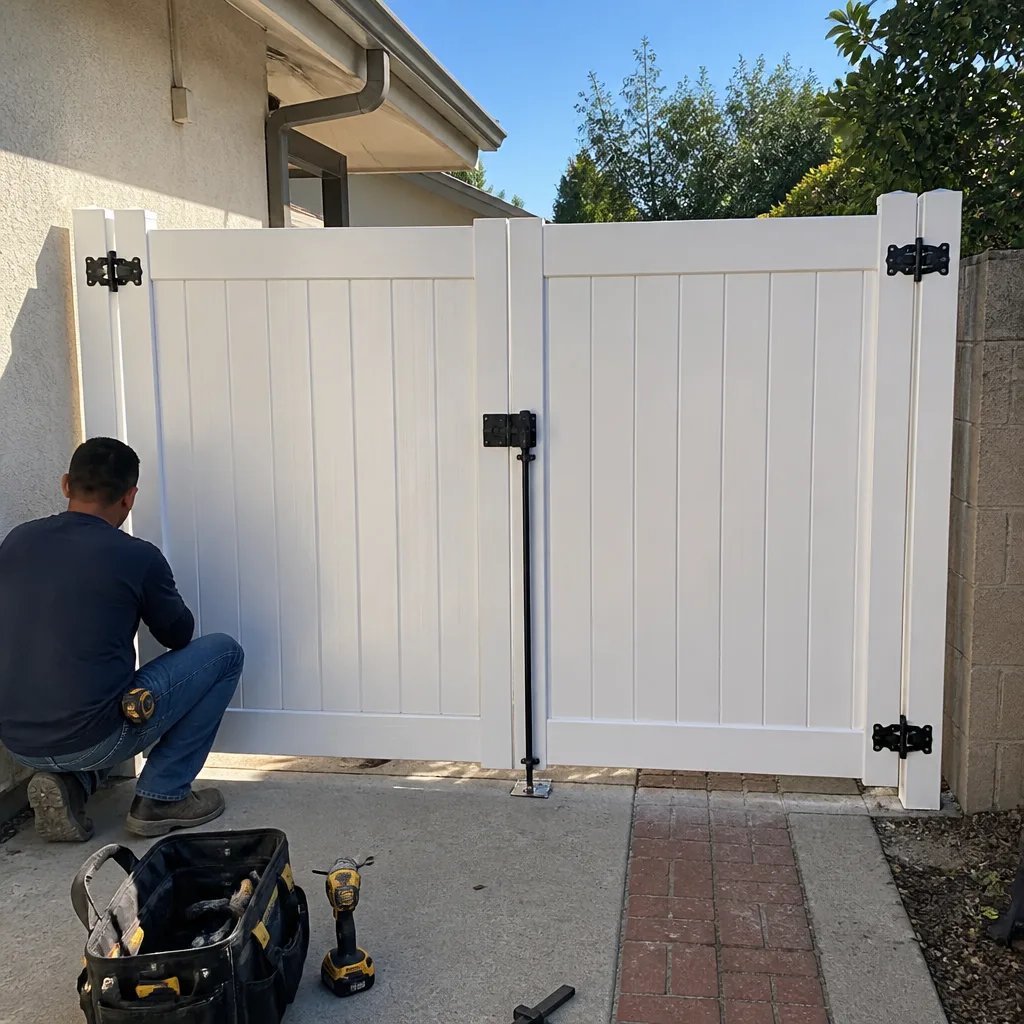 After
AfterGate Repair Warning Signs: A Garden Grove Homeowner’s Reference Guide
Most gate failures in Garden Grove do not happen suddenly. They arrive the way a toothache does: a small irritation that is easy to ignore until it isn’t. Homeowners in neighborhoods like West Garden Grove and the area around Chapman Avenue often tell us the same story: the gate had been acting up for months before it finally refused to open on a Monday morning. The good news is that a sliding or swinging gate almost always telegraphs its problems well in advance, and knowing what to listen for can mean the difference between a $89 tune-up and a full motor replacement. This guide walks you through the warning signs we’ve seen on thousands of Garden Grove driveways since we started in 1984, what those signs mean, and when to make the call.
Quick Answer
If your gate hesitates, grinds, reverses mid-cycle, or needs a push to get moving, those are early signs of trouble that will not fix themselves. In Garden Grove, gate repair typically costs $350-$900 for motor and board issues and $150-$400 for mechanical problems like hinges and wheels, and most repairs are completed in a single visit by a qualified gate specialist. The sooner you address a small symptom, the less likely you are to face a dead gate on a hot afternoon.
Table of Contents
- 1. The Sounds Your Gate Makes and What They Mean
- 2. Jerky or Hesitant Movement: The First Sign of Trouble
- 3. A Gate That Reverses Mid-Cycle Is Telling You Something
- 4. Sagging, Rubbing, and Misalignment: Mechanical Wear You Can See
- 5. Power and Control Issues: When the Opener Stops Listening
- 6. Rust and Corrosion in Garden Grove’s Coastal Air
- 7. The Age Factor: When Repair Beats Replacement, and When It Doesn’t
- 8. Common Mistakes to Avoid
- 9. When to Call a Professional
- 10. Frequently Asked Questions
- 11. The Bottom Line
The Sounds Your Gate Makes and What They Mean
Your gate speaks before it breaks. The most useful habit a Garden Grove homeowner can develop is walking out to the gate once a week and simply listening while it opens and closes. A properly functioning gate produces a steady, even hum from the motor and a smooth rolling or swinging motion. Anything else is a message.
Here are the specific sounds we’ve learned to diagnose over four decades of gate work in Orange County:
- A grinding or metallic scraping sound usually points to dry or failing bearings in the wheels, a chain that has stretched and is dragging, or a gear inside the opener that is wearing thin. In Garden Grove’s climate, the fine dust and occasional coastal moisture combine to wear down ungreased metal surfaces faster than homeowners expect.
- A high-pitched squeal on startup or shutdown is almost always the motor’s capacitor or belt. It is an inexpensive part, but ignoring it can lead to motor burnout, which is not.
- A rhythmic clicking with no movement often means the control board is sending a signal but the motor is not receiving enough voltage, or the solenoid lock is failing. On Viking and Ghost Controls openers, we see this pattern more frequently than on other brands because of how their boards handle low-voltage input.
- A thumping or banging sound at the end of travel means the limit switches are out of adjustment and the gate is hitting its stops too hard. Every time that happens, the frame takes a little more stress, and welds crack over time.
- A low growl that fades in and out can indicate a failing transformer or a motor drawing inconsistent amperage. This one is worth a call sooner rather than later, because a struggling motor will eventually trip the breaker and leave you stuck.
What surprises most homeowners is how early the sounds appear. A gate that will not open at all was usually making noise for three to six months beforehand. The fix would have been under $200. The replacement, as we’ve seen too many times, runs past $1,000.
Jerky or Hesitant Movement: The First Sign of Trouble
If your gate pauses for half a second before moving, or if it shudders and lurches instead of gliding, your driveway is showing you a warning. Jerky movement is rarely a single problem. It is a symptom with several possible causes, and the order in which we check them matters.
- Obstruction in the track or path. Even a small rock, a palm frond, or a buildup of landscaping gravel in the V-track can cause hesitation. Garden Grove’s mature trees drop plenty of debris, and gates near jacarandas and magnolias will pick up more of it.
- Worn or flat-spotted wheels. Steel wheels on steel track wear down over years. A flat spot makes the gate lurch at the same point in each cycle. The wheels on a typical sliding gate in a Garden Grove neighborhood last 5 to 8 years before they need attention, less if the gate is opened and closed more than ten times a day.
- Voltage drop to the motor. Long wire runs from the house to the gate can lose voltage, especially in older Garden Grove homes where wiring was installed decades ago. A motor that gets 100 volts instead of 120 will move, but it will move weakly and inconsistently.
- Binding hinges on a swing gate. Swinging gates depend on hinge alignment. When hinges wear or the post shifts in wet soil, the gate binds and the opener fights to move it. Garden Grove’s clay-heavy soil expands and contracts with the wet and dry seasons, and gate posts can shift enough over ten years to cause consistent binding.
- Failing capacitors. A motor starting capacitor gives the opener its initial kick. When the capacitor weakens, the gate starts slowly and often needs a push from the opener’s momentum to complete the cycle.
In our experience, hesitation is the single most overlooked warning sign. Homeowners think, “Well, it still opens.” And it does, until the day it doesn’t. The repair for a gate that hesitates is almost always cheaper than the repair for a gate that has stopped.
A Gate That Reverses Mid-Cycle Is Telling You Something
A gate that opens halfway, stops, and then reverses direction is not just annoying. It is a diagnostic signal. Gate openers are designed to reverse when they encounter resistance. That is a safety feature, and it is there to prevent damage to the motor and to anyone crossing the gate’s path. But when a gate reverses with nothing in its path, the system is misreading its environment.
The most common causes we find on Garden Grove service calls include:
- Obstruction sensors out of alignment or dirty. Photo eyes and safety edges need a clear line of sight. Dust, spider webs, and garden sprinkler overspray can trigger false reversals. In Garden Grove, sprinkler overspray is one of the most common culprits because many irrigation systems sit close to the driveway gate line.
- Limit switch failure. The limit switch tells the gate where to stop. When it drifts out of position or fails, the opener gets confused about where the gate actually is. On DoorKing and Elite openers, limit switch wear is a known failure point after 8 to 10 years of daily cycling.
- Excess load on the motor. A gate that has become heavy due to rust, debris, or misalignment draws more current than the opener was designed to deliver. The control board interprets the increased draw as resistance and reverses the cycle. This is often the first sign of a mechanical problem that has not yet become visible.
- Remote control or keypad signal interference. Some Garden Grove neighborhoods have overlapping radio interference from nearby commercial properties, and a gate that intermittently reverses may be reacting to a stray signal. This is more common with older single-frequency remotes.
The important thing to understand is that a reversing gate is not in its right mind. It is sending a signal that one of its safety systems is active, and the correct response is to have it diagnosed. A good gate technician can isolate the cause in under an hour in most cases.
Sagging, Rubbing, and Misalignment: Mechanical Wear You Can See
Some gate problems you hear. Others you can see from the sidewalk. Sagging gates, gates that rub against the ground or the frame, and gates that no longer sit level are all visible signs of mechanical wear. And they are some of the easiest warning signs to diagnose yourself before calling us.
Here is what to look for on your next walk past the gate:
- The gate leans. Stand at the curb and look at the gate straight on. A level gate should look straight. If the top rail tilts visibly, the hinges, the post, or the frame has moved. On a swing gate, this is almost always hinge wear. On a sliding gate, it is usually wheel or track wear.
- The gate scrapes the ground or the track. If your sliding gate leaves a scratch mark in the concrete or drags through debris, the wheels have dropped or the track has shifted. Garden Grove’s older homes with original concrete driveways often have settled slabs, and a track that was perfectly level in 1985 may have a low spot now.
- The gate leaves a gap at the top or bottom of the latch side. On a swing gate, a gap at the top means the gate has dropped on its hinges. A gap at the bottom means the hinge side post has moved. Either way, the latch and lock are not engaging correctly, which is also a security concern.
- The gate shakes or wobbles during travel. Sliding gates should ride smoothly on their track. A wobble means wheel bearings are failing, the track has a gap or kink, or the gate frame itself is flexing due to a broken weld.
- Paint is flaking along the bottom rail. Flaking paint at the bottom of steel gates is often the first visible sign of rust working through the metal. In Garden Grove, where mornings are often damp and coastal moisture travels inland, bottom-rail rust is common on uncovered gates.
The mechanical truth is simple: a gate is a big, heavy piece of metal that moves. Everything that moves wears. The question is not whether the gate will sag, rub, or shift. The question is whether you catch it before the wear turns into a broken weld or a snapped hinge that leaves your gate hanging. A steel gate that has sagged enough to visibly rub is doing damage to itself every time it cycles. Fixing the alignment early costs less than fixing the structural damage later.
Power and Control Issues: When the Opener Stops Listening
When a gate stops responding to its remote, keypad, or intercom, the natural assumption is that the opener itself has failed. That is sometimes true. But it is just as often a peripheral problem: a battery, a photo eye, a transformer, or an access control board that has lost its programming. Understanding the difference can save you a service call or, more accurately, help you explain the problem clearly when you make that call.
Here is a simple diagnostic order we walk through with Garden Grove homeowners over the phone:
- Check the remote control battery. This sounds obvious, and it is. Remotes get dropped, left in the sun, and forgotten. A remote with a fading battery may work intermittently from some distances and not at all from others. Replace the battery before assuming anything bigger is wrong.
- Test the keypad. If the keypad does not light up or does not beep, the keypad itself may have failed or lost its connection to the operator. Some keypads run on batteries, and Garden Grove’s summer heat is hard on battery-powered devices mounted in direct sun.
- Check the power source. A tripped breaker or a GFCI that has popped is a common cause of a completely dead gate. Garden Grove homes with older panels are more prone to nuisance trips when the gate motor’s power draw spikes with age. Reset the breaker once. If it trips again, do not keep resetting it. Something is drawing too much current, and that is a job for a professional to diagnose rather than a sign to keep flipping the switch.
- Look for a blown fuse on the control board. Many board failures start with a simple fuse. If the gate is completely dead and the breaker is fine, there may be a fuse issue, but opening the control box is work for someone who knows what they are doing. The capacitors in gate operators hold a real charge even with the power off, and a careless poke can give you a shock and damage the board.
- Listen for a click or hum when the keypad or remote is triggered. If you hear the control board click but the motor does not move, the board is receiving the signal and the problem is downstream in the motor or capacitor. If you hear nothing at all, the board may not be receiving signal, which points to the remote, the antenna, or the board input.
We are trained and equipped on nine gate-automation brands, including Viking, Ghost Controls, DoorKing, and Elite, because Garden Grove driveways run everything from 1990s FAAC boards to brand-new LiftMaster operators with Wi-Fi. When a homeowner has a mystery brand on their gate, we’ve usually seen it before.
Rust and Corrosion in Garden Grove’s Coastal Air
Garden Grove sits about eight miles from the Pacific, which is close enough for marine air to matter to steel gates. Morning fog rolls inland regularly, especially in late spring and early summer. That fog leaves a thin film of salt and moisture on every metal surface it touches. For a steel gate without proper protection, that film is the beginning of rust.
Rust is not just a cosmetic problem. On a moving gate, rust does three destructive things:
- It weakens the steel. Rust converts solid steel into flaky iron oxide, which has almost no structural strength. A gate post or frame rail that looks solid from the outside can be paper-thin on the inside. We’ve seen bottom rails that bent under their own weight once the outer skin was ground away.
- It binds moving parts. Hinges, wheels, chains, and even the internal gears of openers corrode when exposed to moisture. A rusted hinge does not swing freely, and the motor has to work harder, drawing more current and shortening its life.
- It spreads beneath the paint. Rust that starts at a scratch or a chipped edge creeps under the surrounding paint, lifting it in sheets. By the time a Garden Grove homeowner sees visible rust, the damage underneath is often two or three times larger than the visible patch.
- Under 10 years old: In most cases, repair is the clear answer. A properly installed gate should last 20 to 30 years with basic maintenance, and if a gate under ten years old is failing, it is usually a component issue, not a structural one. Hinges, wheels, and opener boards are sensible repairs.
- 10 to 20 years old: This is the judgment-call zone. The gate’s frame may still be sound, but the opener may be near the end of its life. If the opener has failed and the gate is in good condition, a motor replacement is often a smart investment. If the gate itself is rusting through or the welds are cracking, it may be time to plan for replacement rather than patch it repeatedly.
- Older than 20 years: A well-built wrought-iron or heavy steel gate can absolutely still be worth repairing. These gates were often installed with heavier material than anything sold today at the box stores. The key is whether the frame is still straight and solid. If it is, new hardware, new wheels, and a new opener can give it another decade of life. If it is not, replacement may be the more honest answer.
- Lubricating a grinding gate and calling it fixed. Lubrication quiets a dry wheel for a week or two, but if the bearing is failed or the gear is worn, the noise comes back. In Garden Grove’s dusty, sometimes damp climate, lubricant without diagnosis just postpones the repair and lets the damage continue. The source of the noise has to be found, not silenced.
- Adjusting limit switches or force settings without understanding the system. Every opener brand has its own adjustment sequence, and getting it wrong can make the gate slam its stops, stall mid-cycle, or refuse to close. On openers like Viking and Ghost Controls, a wrong force setting can smoke a motor in days. This is one place where watching a YouTube video and guessing costs far more than the service call would have.
- Using a pressure washer directly on the opener or control box. Garden Grove homeowners love a clean driveway, and we understand why. But water driven into a control board or a motor housing is a quick way to a shorted board. Wash the gate, not the opener. Cover the control box if you must spray nearby.
- Ignoring a gate that needs a manual push to get started. If you have to shoulder the gate to get it moving, the motor is either failing or the gate is binding. Either way, the problem gets more expensive to fix every week it runs that way. A gate that needs help to start will soon not start at all.
- Painting over rust without removing it first. Garden Grove’s moist mornings will rust a gate right through a paint job if the rust is still active underneath. The metal must be brushed or ground to clean steel before primer and paint go on. Otherwise you have the same rust, now wearing a nicer coat.
- Replacing the whole opener when only a board or a capacitor failed. Some homeowners are told the opener is dead when a $150 board or a $40 capacitor is the actual failure. Getting a second opinion on a written estimate is free with us, and we have saved Garden Grove homeowners thousands by finding the small failure instead of confirming the big quote.
- Delaying a call because the gate still works most of the time. “Most of the time” is not a safety margin. It is a countdown. Every gate we replace could have been repaired for less if the call had come a month or two earlier.
Prevention is straightforward: keep the gate clean, touch up scratches promptly, and make sure water drains away from the gate posts. Garden Grove properties with sprinkler systems that spray directly onto the gate line are at the highest risk. If your gate has surface rust, a wire brush, a rust converter, and a quality enamel coat can stop it. If the rust has eaten through the metal, the fix is a cut-and-weld repair, which is bread and butter for us. We have been repairing and welding gates in Garden Grove since Victor Salinas took over the company, and rust repair is a request we handle nearly every week.
The Age Factor: When Repair Beats Replacement, and When It Doesn’t
Gates in Garden Grove vary widely in age. Some of the prettiest wrought-iron fences in the city were installed in the 1970s and 1980s and have been maintained lovingly ever since. Others are ten years old and already failing because they were installed with light-gauge steel or cheap hardware. Age is a factor, but it is not the only factor.
Here is how we think about the repair-versus-replace decision, and we share this openly with homeowners who call us:
The honest truth from a company that has been doing this work for over 42 years is that some companies push replacement because it is a bigger invoice. We do not. We quote the repair that will fix the problem, and we tell you honestly when a newer gate would cost you less in the long run. A square deal means the option that is right for you and your home, not the option that is right for our open calendar.
Common Mistakes to Avoid
When to Call a Professional
If your gate is making noise, moving erratically, reversing on its own, sagging visibly, or ignoring its controls, call before it quits. The safest, cheapest repair is the one made while the damage is small. Specific signs that warrant a same-week call: a gate that slows progressively over a month, a burning or electrical smell near the opener, a hinge or wheel that is visibly separated from the frame, or a gate that has dropped more than an inch from level. If the gate will not open at all and you need your car in or out, call immediately. We have a live person answering the phone 24 hours a day, 7 days a week, which means you will speak to a real human at midnight on a Sunday if that is when the gate fails. Ironworks Gate Co. offers free estimates in Garden Grove. Call (424) 395-4973 and we will walk you through what you are seeing, give you an honest assessment over the phone, and schedule a visit if the problem needs hands-on attention.
Frequently Asked Questions
Gate repair in Garden Grove typically runs $150 to $400 for mechanical issues like hinges, wheels, and track adjustments, and $350 to $900 for opener and control board work, depending on the brand and the parts needed. The price is always quoted and agreed before any work starts, so there are no surprises on the bill. Call (424) 395-4973 for a free estimate on your specific gate.
In most cases, yes. Most gate repairs are completed in a single visit, and we stock common parts for major opener brands on our trucks so we do not have to make a second trip. Emergency calls are answered 24/7, and a live person picks up the phone every time, not a voicemail tree.
A full opener replacement includes removing the old operator, mounting the new one, wiring it to your existing controls and safety devices, setting the open and close limits, adjusting the force settings, testing all remotes and keypads, and cleaning up the work area. We program your existing remotes wherever possible or pair new ones, and every job is covered by our 90-Day Done Right Promise in writing.
We are trained and equipped on nine major gate-automation brands: LiftMaster, FAAC, BFT, Linear, Viking, Ghost Controls, DoorKing, Elite, and Mighty Mule. Whatever opener is on your Garden Grove driveway, there is a good chance we service it regularly.
It depends on the frame. If the gate itself is still solid and straight, repairing the hardware and opener is usually the smarter money. If the frame is rusting through or the welds are failing, replacement may cost less over the next decade than repeated patches. We give you an honest assessment based on what we find, not on what we would prefer to sell you.
Yes. An annual tune-up catches worn wheels, dry bearings, weak batteries, and drifting limit switches before they turn into breakdowns on a Garden Grove summer afternoon. We offer an $89 Seasonal Tune-Up that includes cleaning, lubricating, and adjusting the gate and its opener. A small annual service costs far less than a motor replacement, and it keeps a 40-year-old gate closing like the day it was hung.
The Bottom Line
A gate in Garden Grove will almost always warn you before it fails. Listen for new noises. Watch for jerky or hesitant movement. Note a reversing cycle or a sag in the frame. And when you spot one of these signs, act on it. The difference between a $89 tune-up and a $1,200 opener replacement is often just a few weeks of paying attention. We have been fixing gates in this city since Victor Salinas took the helm at Ironworks Gate Co., and the work never changes: find the problem, fix it right, and stand behind the repair in writing. A square deal, every time. If your gate is telling you something, call (424) 395-4973 for a free estimate. A live person will answer, and we will be there when we say.
Written by Victor Salinas, Owner at Ironworks Gate Co., serving Garden Grove since 2013. For more about our work, visit the Ironworks Gate Co. home page.